What kinds of decks are common around Fredericksburg?
Mostly pressure-treated pine decks on suburban homes in Spotsylvania and Stafford, many raised off the back of the house above a walk-out basement, plus smaller decks and porches behind older homes near downtown. Ultimate Powerwash cleans both at low pressure, adjusting for each deck’s height, shade and age.
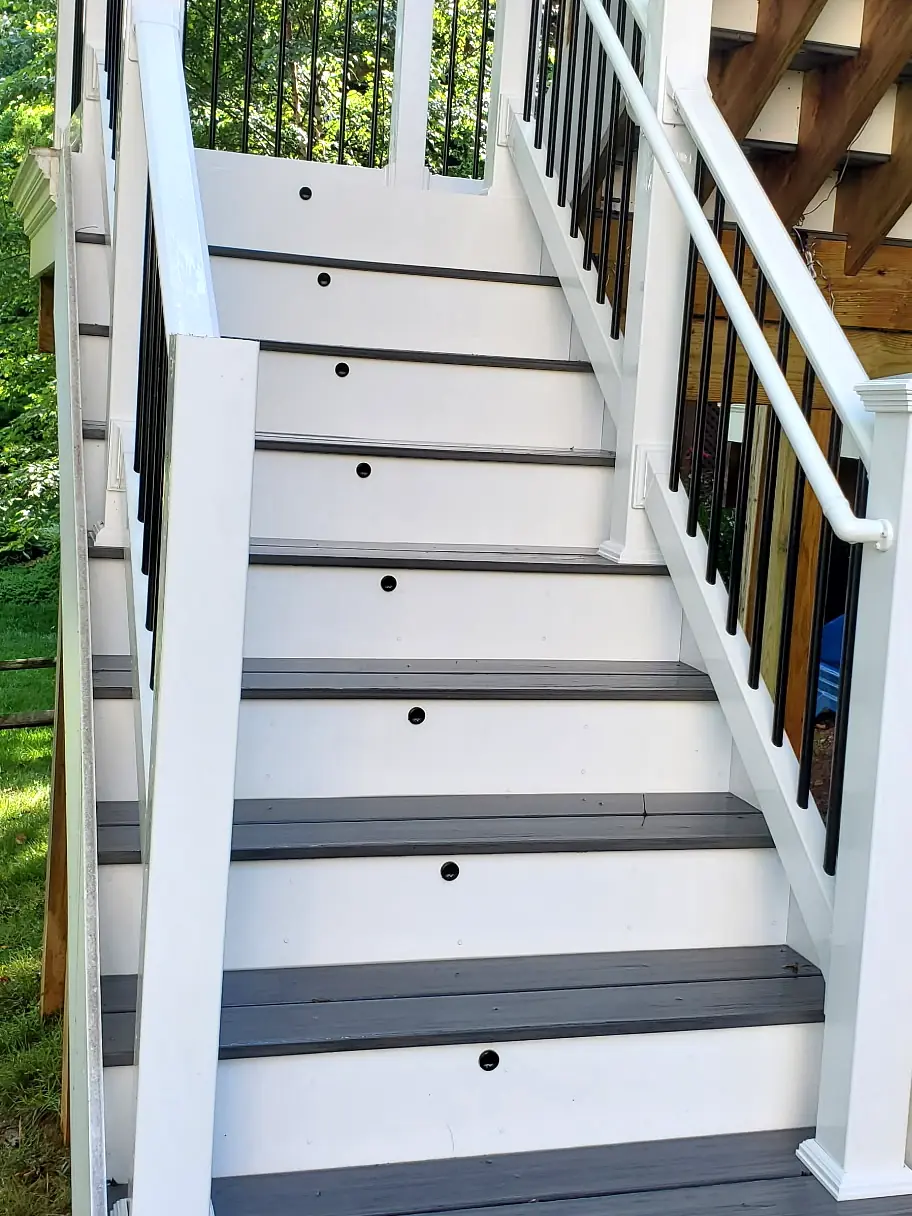
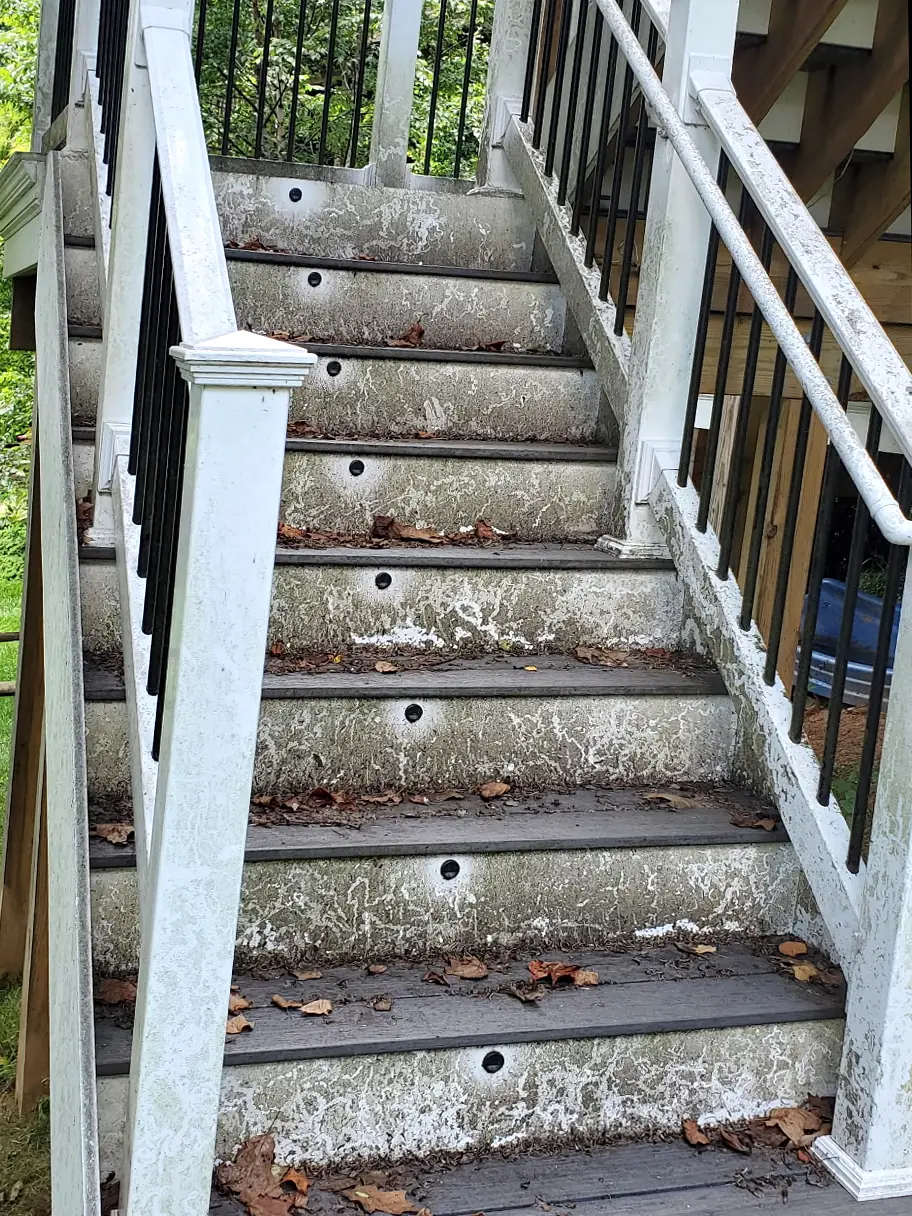
In the commuter neighborhoods around the city, a raised deck off the kitchen is a familiar sight, with stairs down to a sloped and often wooded yard. These decks have a lot of surface: boards, long railings, stair stringers and the lattice or skirting below. The underside stays shaded and damp, and the stairs usually carry the most algae.
Near downtown, outdoor space tends to be smaller. Back decks and porches on older homes may be tucked between neighboring houses or under mature trees, where they see little sun. Painted porch floors are a different surface from a stained deck, so they are handled like painted siding: soft washed, never blasted.
Why do Fredericksburg decks turn green and gray so quickly?
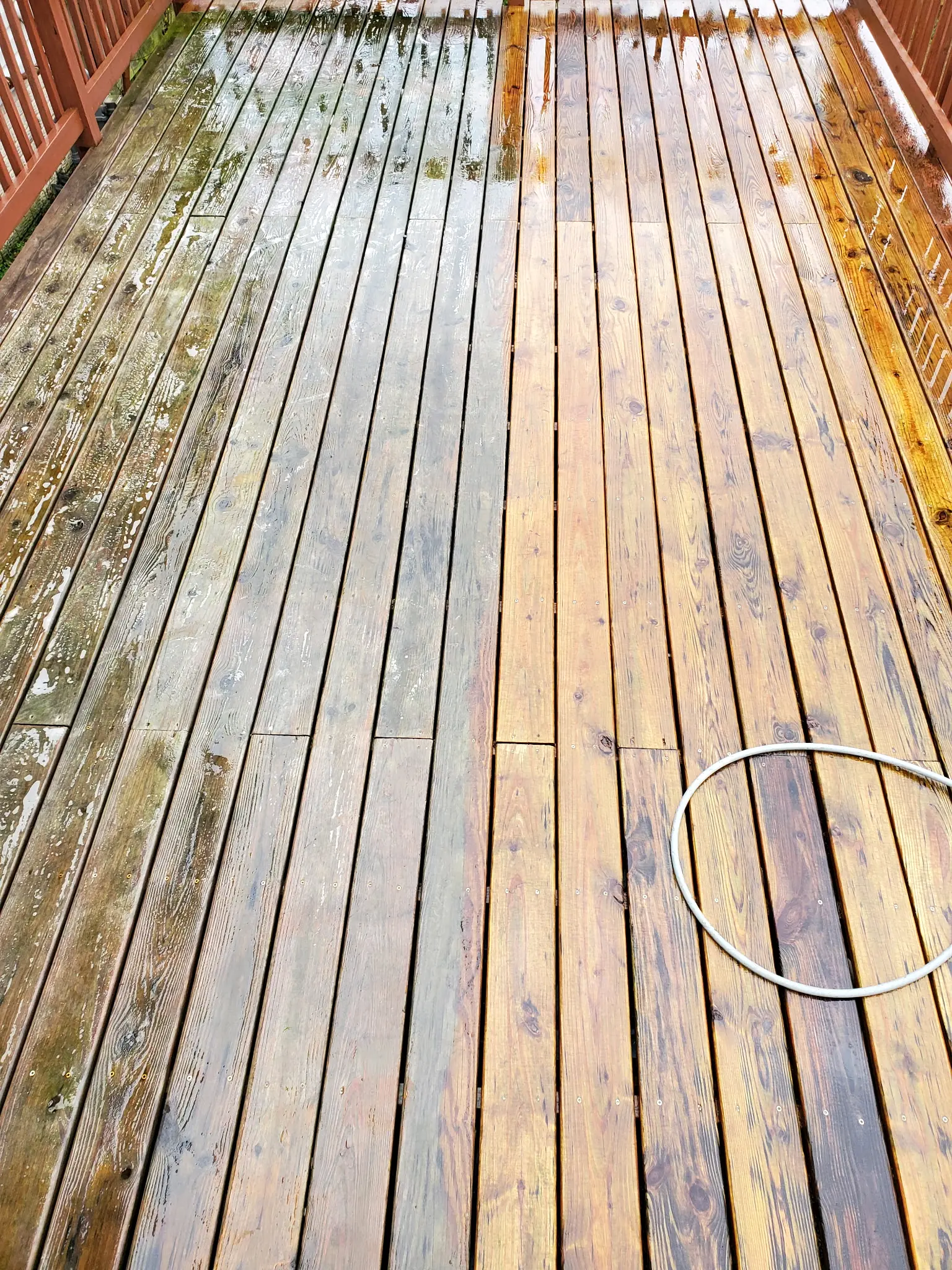
Shade, humidity and tree cover. Decks near the Rappahannock and on wooded lots stay damp after rain and dew, which feeds algae and mildew, while boards in full sun weather to gray. Many Fredericksburg decks show both, green in the shaded corners and gray in the sun.
Virginia summers are hot and humid, and spring pollen settles into board gaps and onto railing caps. Under trees, pollen, leaves and moisture hold water against the wood, and boards beside the house and behind planters stay wet longest.
- Green film on stair treads and the shaded end of the deck.
- Black mildew spotting on railing undersides and balusters.
- Silver-gray weathering on the boards that get full sun.
- Debris packed into board gaps, holding moisture against the framing below.
A hard blast is the wrong fix for any of these. Our article on whether you can pressure wash a deck explains the damage high pressure does to softwood boards.
How does deck cleaning lead into staining and sealing?
Cleaning removes the weathered fibers, growth and dirt that keep stain from soaking in evenly, and the wood then needs to dry fully before any finish goes on. Ultimate Powerwash can plan the cleaning and the staining as one project so the drying time is built in.
- Clean the boards, rails and stairs at low pressure.
- Let the wood dry. The stain manufacturer’s label sets the rule, and shade or humid weather stretches the wait.
- Check the surface. Water that soaks in quickly is a common sign the wood is ready for a penetrating stain.
- Stain and seal during a stretch of dry, mild weather.
Choosing a color is part of the plan. Suburban decks are often matched to the siding or trim, and if your neighborhood has a homeowners association, check whether it has rules on exterior colors before you choose. Our deck and fence staining and sealing service offers 150+ stain colors, from natural wood tones to solid colors.
When should you clean and stain a deck in Fredericksburg?
As general guidance, clean in spring after the heaviest pollen has fallen, and stain during dry, mild weather in late spring or early fall. Midsummer humidity and summer storms can slow drying, and many stains have minimum temperatures on the label.
A spring cleaning clears winter grime and pollen before the deck sees heavy use. If staining is the goal, early fall is often easier, since temperatures are milder and humidity tends to ease. The final timing always depends on the forecast.
If your fence needs the same treatment, see fence cleaning in Fredericksburg. The siding above a deck often needs attention too, and house washing in Fredericksburg covers it.