
- Pressure-treated pine decks
- Cedar decks
- Composite decking
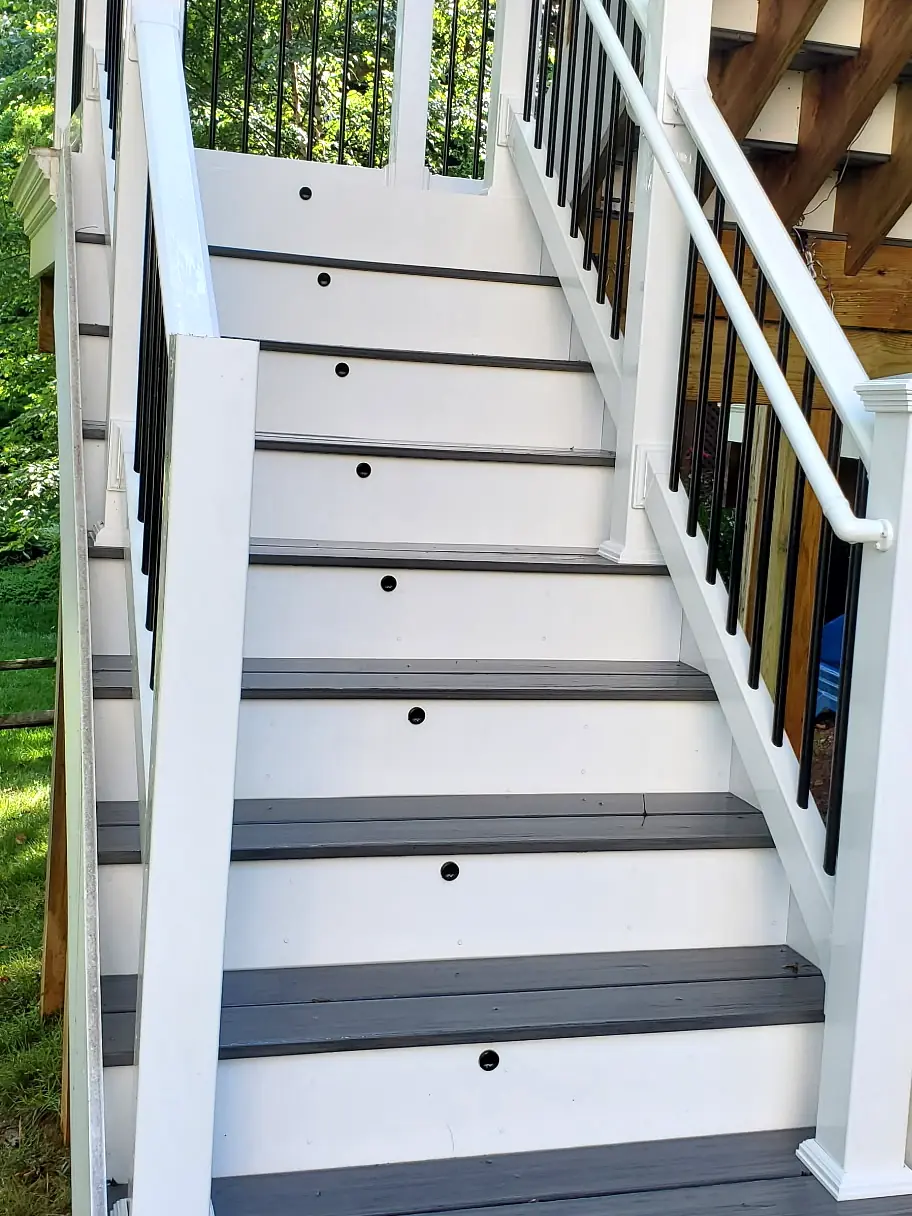
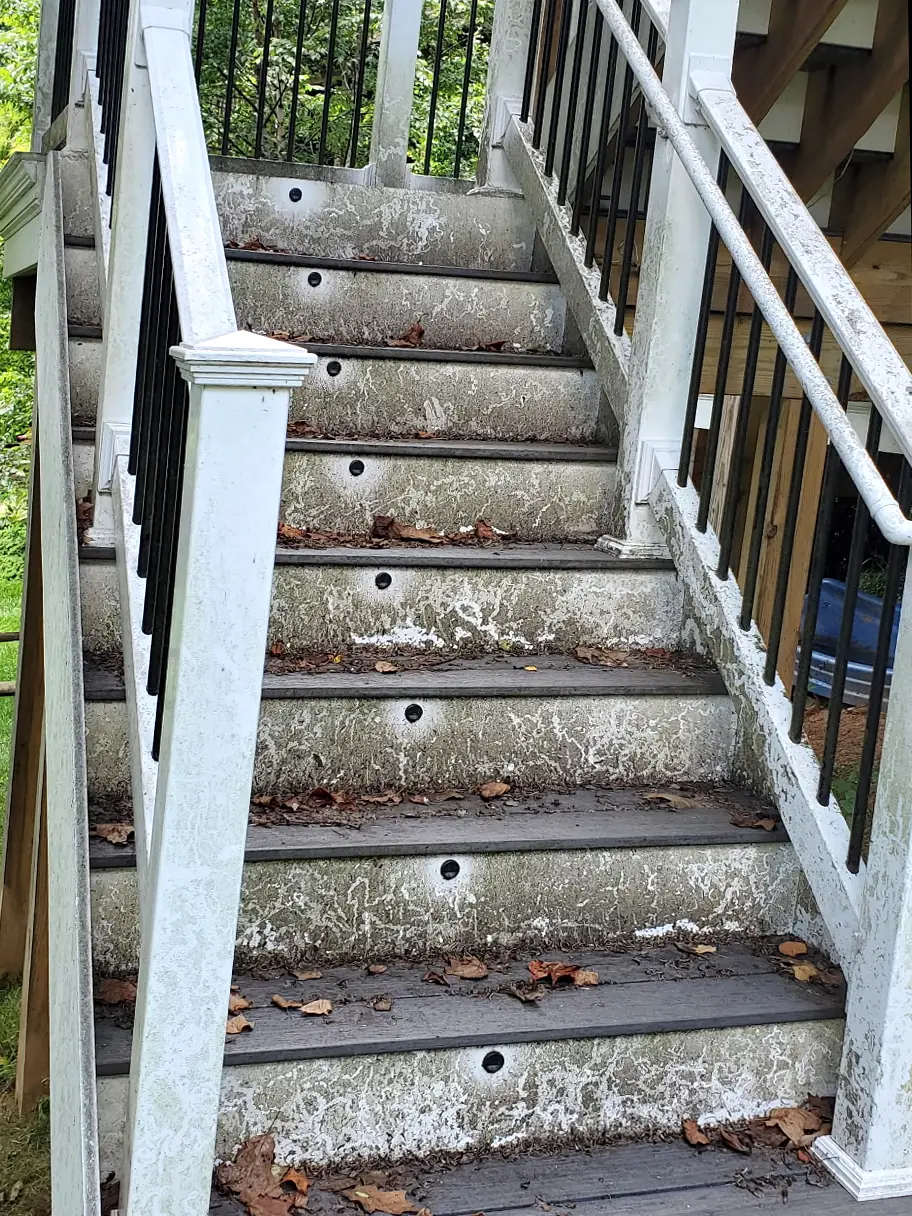
- Deck railings, balusters and stairs
- Built-in benches and planters
What does professional deck cleaning include?
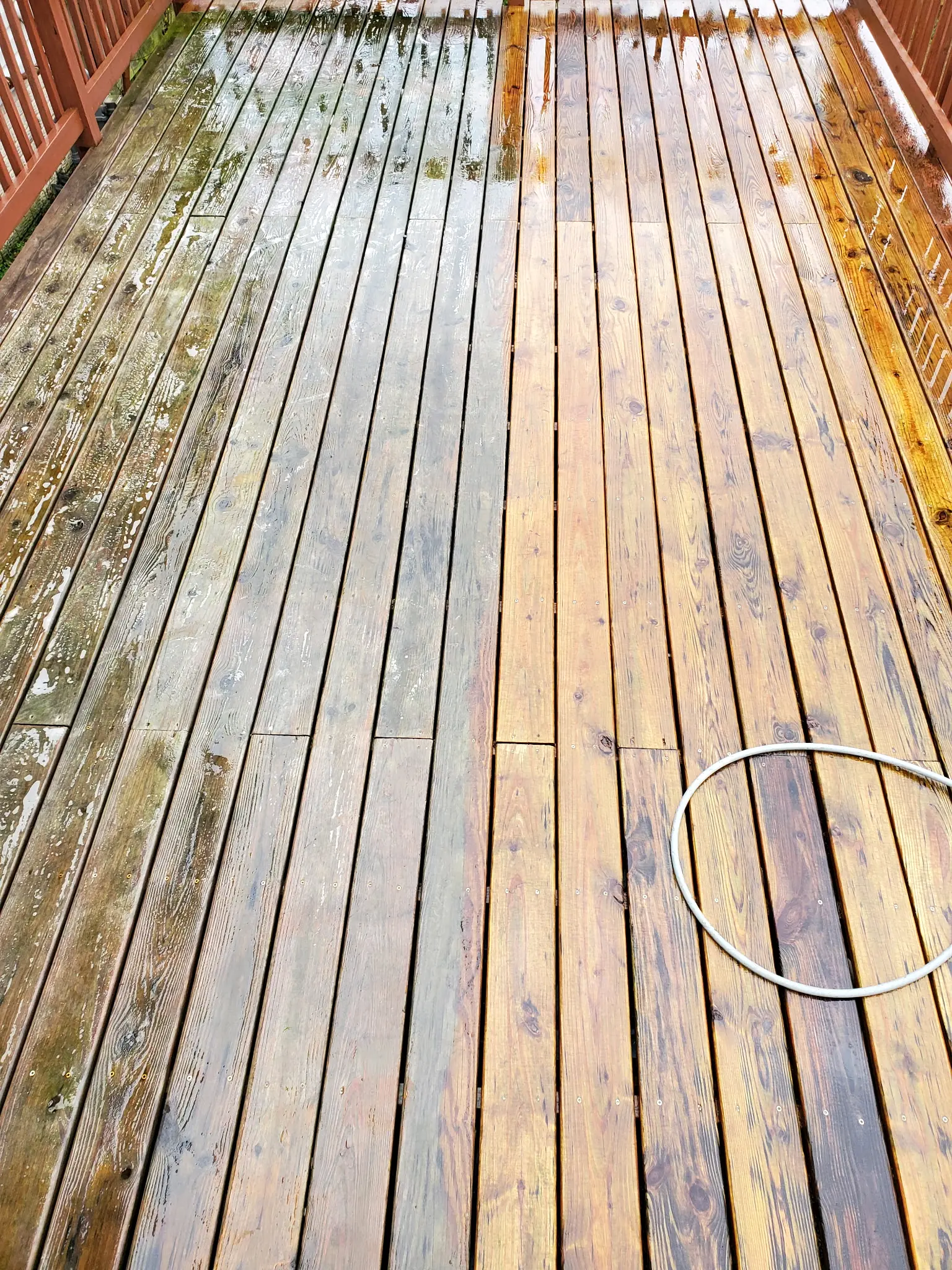
Professional deck cleaning removes weathered gray fibers, algae, mildew and embedded dirt from the deck boards, railings and stairs, using a cleaning solution and low-pressure rinsing rather than a hard blast. Ultimate Powerwash looks at the material and its condition first, then matches the method to the deck.
A deck is not a driveway. Concrete can take a lot of pressure; wood and composite cannot. A full deck cleaning typically covers:
- Deck boards, including the gaps between them, where leaves and debris hold moisture.
- Railings, balusters and top caps, which collect pollen and mildew on their shaded sides.
- Stairs and landings, where algae can make treads slick.
- Built-ins such as benches, planter boxes and privacy screens.
If your deck is attached to the house, the siding above it often needs attention too. Many homeowners pair a deck cleaning with professional house washing in Stafford so the whole back of the house matches.
Why low-pressure washing matters on a wood deck
High pressure can tear up the soft grain of deck boards, leaving a fuzzy, splintered surface and visible gouges or wand marks. Ultimate Powerwash uses low-pressure washing on decks so the cleaning solution does most of the work and the wood stays intact.
Most decks in our area are built from pressure-treated pine, with some cedar. Both are softwoods. Each growth ring has a denser band and a softer band, and a narrow, high-pressure stream erodes the softer wood faster. That uneven erosion is what causes the damage people see after an aggressive wash.
- Furring (or fuzzing)
- Loose wood fibers stand up from the surface after the wood dries, leaving the deck rough to the touch and uneven when stained. It often has to be sanded down before a finish goes on.
- Gouging and etching
- Grooves cut into the boards where the stream was held too close or too long. These are permanent and show clearly through stain.
- Wand marks and striping
- Lighter and darker bands across the boards from uneven passes, which can make a deck look worse than before it was cleaned.
What causes gray, green and black stains on deck boards?
Gray is usually weathered wood fibers broken down by sunlight, green is usually algae, and black or gray spotting is usually mildew. Each one responds to cleaning a little differently, which is why Ultimate Powerwash looks at the stains before choosing a method.
- Silver-gray weathering
- Sunlight breaks down lignin, the natural binder in the surface of the wood. The loosened fibers turn gray and wash out, which is why an unfinished deck slowly goes silver. Cleaning removes that weathered layer and brings back a fresher wood tone.
- Green film
- Algae grows where boards stay damp: under trees, on the shaded side of the house, and near downspouts. It is slippery when wet, especially on stairs.
- Black or gray spotting
- Mildew is a surface fungus that shows up as speckles or patches, often in the shadiest corners of the deck and on the undersides of rails.
Virginia summers are hot and humid, and spring brings a heavy coat of tree pollen. Decks that sit in shade or under a tree canopy stay damp longer, and those are the decks where algae and mildew build up fastest.
Can you pressure wash a composite deck?
Composite decking can usually be cleaned with low pressure, but the right approach depends on the brand and product line, so the manufacturer’s care guidance should come first. Ultimate Powerwash treats composite as its own surface and keeps pressure low.
Composite boards don’t gray the way wood does, but they are not maintenance-free. Pollen, dirt and organic growth settle into the embossed texture, and mildew can form on the surface in shaded, damp spots. Older composite boards in particular can show dark spotting.
- Check the manufacturer’s guidance. Many composite brands publish care instructions, and some set limits on pressure washing or advise against it. If you have the brand name or original paperwork, share it with us.
- Keep pressure low and passes even. Composite surfaces and capstock can scar under a concentrated stream.
- Expect some stains to be permanent. Grease, rust and some deep stains can set into composite and may not fully come out with washing.
| Wood (pressure-treated pine, cedar) | Composite | |
|---|---|---|
| Typical problem | Graying, algae, mildew, furring from past washes | Pollen, dirt, mildew spotting in the texture |
| Pressure | Low | Low, within manufacturer guidance |
| Grays in the sun? | Yes, over time | Not in the same way |
| Needs stain or sealer after? | Usually recommended | Generally not stained |
| Main risk | Fuzzing and gouging from high pressure | Scarring the surface; voiding care terms |
How long should a deck dry before staining?
A washed wood deck needs to dry thoroughly before stain or sealer goes on, and the stain manufacturer’s label sets the rule. In practice that usually means at least a day or two of dry weather, and longer in shade, after rain, or in humid stretches of a Virginia summer.
Stain applied to damp wood can’t soak in properly. It may look blotchy, dry unevenly, or fail early. Low-pressure washing helps here, because it doesn’t drive as much water into the boards as a hard blast does.
- Sun vs shade: a deck in full sun can dry much faster than one under trees.
- Board thickness and age: thicker boards and older, porous wood can hold moisture longer.
- Weather: rain, dew and high humidity all slow drying.
- The water-drop check: a common rule of thumb is to sprinkle water on a board. If it soaks in, the wood is generally ready to accept a penetrating stain; if it beads, something is still in the way.
When is the best time to clean a deck in Stafford and Fredericksburg?
For most decks around Stafford and Fredericksburg, the best time is spring, after the heaviest tree pollen has fallen and before you start using the deck regularly. Late summer and early fall also work well, especially if you plan to stain while temperatures are still mild.
A yearly cleaning keeps most decks in good shape. Shaded decks, decks under trees and decks near wooded lots in Stafford County may need attention more often, since they stay damp and collect more debris. Sunny decks may go longer between washes but gray faster.
- Spring: clears pollen and winter grime before cookout season.
- Before staining: gives the wood time to dry before a finish goes on.
- Fall: removes summer growth and leaves before wet weather sets in.
If your patio or fence is due as well, it’s often efficient to book them together. See our patio cleaning service and fence cleaning service, or request a free deck cleaning quote for homes in Fredericksburg, Stafford and Northern Virginia.
How our deck cleaning process works
Look at the deck first
We check the material, the age and condition of the boards, any existing finish, and the stains we’re dealing with before choosing a method.
Protect the surroundings
We clear the area, pay attention to nearby plants, siding and outdoor fixtures, and plan where the rinse water will run.
Apply a cleaning solution
A cleaning solution suited to the surface is applied to loosen algae, mildew and weathered fibers so less pressure is needed.
Low-pressure wash and rinse
We work with the grain using low pressure and even passes, then rinse the boards, rails and stairs thoroughly.
Walk-through and next steps
We review the results with you and talk through drying time if you plan to stain or seal. Satisfaction guaranteed.
What deck cleaning removes
- Gray, weathered wood fibers
- Green algae
- Mildew spotting
- Pollen and tree debris
- Dirt and foot-traffic grime
- Leaf and tannin stains