
- Vinyl (PVC) privacy and picket fences
- Pressure-treated pine fences
- Cedar fences
- Composite fencing
- Aluminum and ornamental metal fences
- Gates, posts and post caps
Why does my vinyl fence turn green?
A vinyl fence turns green because algae grows on surfaces that stay damp and shaded, and a fence’s north-facing or tree-covered side often stays wet for hours after rain or dew. Ultimate Powerwash removes that green film with low-pressure washing and a cleaning solution rather than blasting it off.
Walk the length of almost any vinyl fence in Stafford and you’ll see it: one side bright white, the other streaked green. The difference is sun. The shaded side dries slowly, and algae thrives on damp surfaces coated with the pollen, dust and organic debris that settle out of the air every spring.
- Shaded runs along wooded lot lines and under tree canopy grow algae fastest.
- The bottom of the fence stays wettest, picking up mud splash and mowing debris.
- Horizontal rails and post caps hold water and collect pollen.
- Sprinkler overspray keeps sections damp and can leave mineral spotting.
Vinyl is non-porous, so most of this growth sits on the surface. That makes vinyl one of the more satisfying fences to clean: once the film is lifted and rinsed, the original color usually comes right back. The same green growth shows up on siding too; our guide to black and green stains on siding explains what’s behind it.
Can a gray wood fence be cleaned back to its natural color?
Often, yes. Graying on a wood fence is mostly a thin layer of sun-weathered fibers plus mildew and dirt, and gentle cleaning removes much of it and brings back a fresher wood tone. Ultimate Powerwash uses low pressure on wood fences so the pickets aren’t fuzzed or gouged in the process.
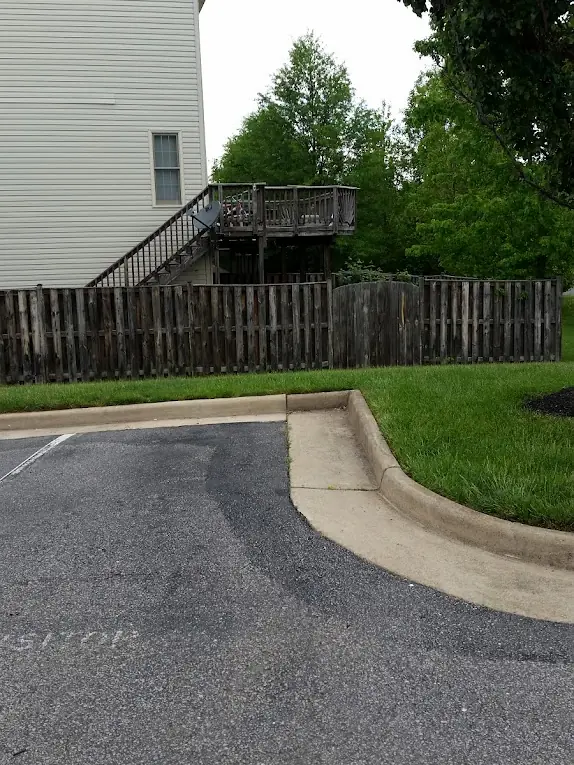
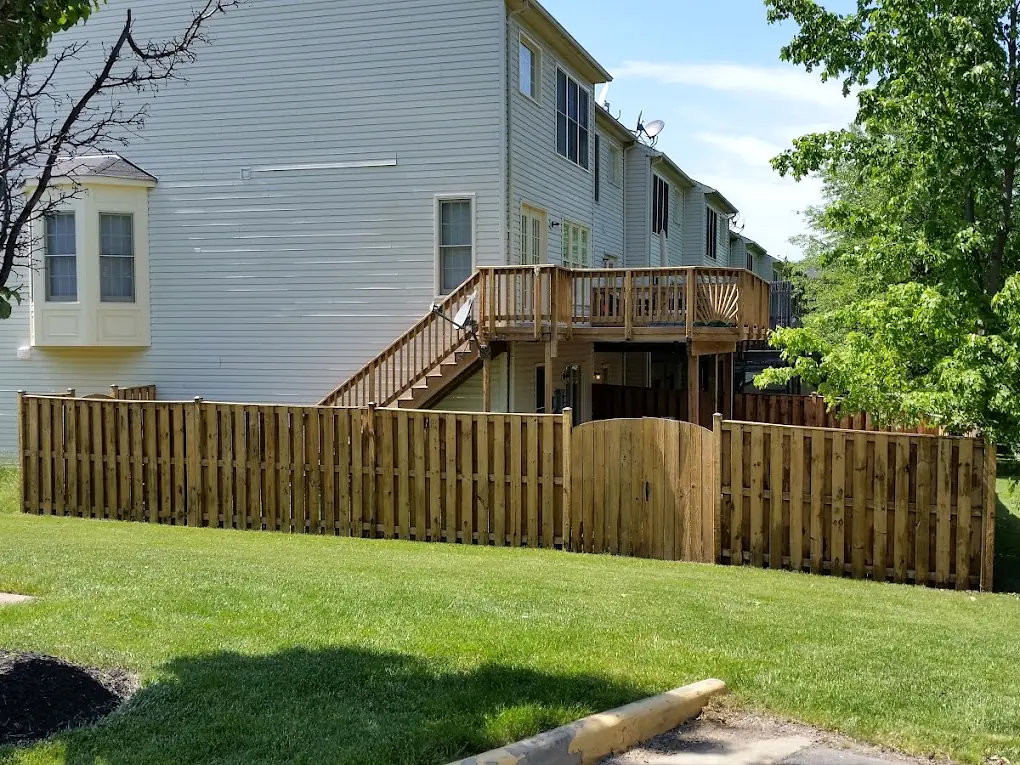
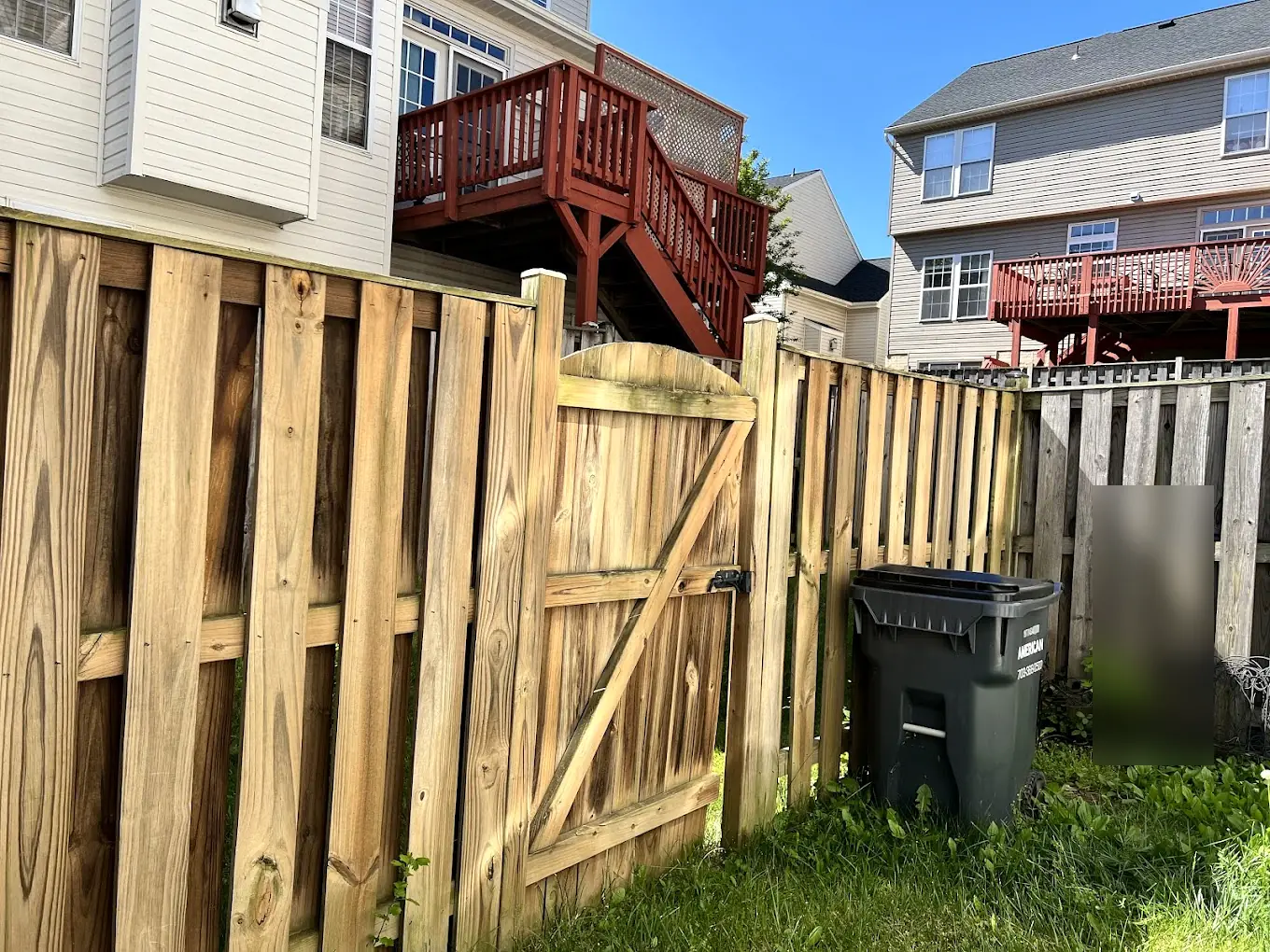
Wood fences in Northern Virginia are usually pressure-treated pine or cedar. Left unfinished, both weather to gray as sunlight breaks down the surface of the wood. Add humid summers and shaded fence lines, and mildew settles into the grain as dark spotting.
Fence pickets are thinner than deck boards, so they are even easier to damage with too much pressure. A narrow, high-pressure stream can raise fibers, splinter edges and leave stripes across the boards. We keep pressure low and let a cleaning solution do the heavy lifting.
How do you clean different types of fences?
Each fence material calls for a different approach: vinyl needs a surface clean, wood needs low pressure that protects the grain, and metal and composite need gentle handling of coatings and finishes. Ultimate Powerwash matches the method to the fence rather than using one setting for everything.
| Material | Typical issues | Our approach |
|---|---|---|
| Vinyl (PVC) | Green algae, mildew, dirt at the base | Cleaning solution and low-pressure rinse |
| Pressure-treated pine | Graying, mildew, algae in shade | Low pressure with the grain; dry before any stain |
| Cedar | Graying, dark spotting, soft grain | Very gentle pressure; cedar marks easily |
| Composite | Dirt and mildew in the texture | Low pressure within manufacturer guidance |
| Aluminum and ornamental metal | Dust, pollen, cobwebs, chalky film | Gentle wash that protects the coating |
Chain link and older painted fences are handled case by case. Peeling paint and rust are condition problems rather than dirt, and washing won’t fix them, so we’ll tell you honestly what cleaning can and can’t do before we start.
Will fence cleaning hurt the plants along my fence?
Fence lines are usually lined with beds, shrubs and mulch, so protecting landscaping is part of the job. Ultimate Powerwash pays attention to plants near the fence, and it helps if you point out anything delicate before we start.
Unlike a house wall, a fence often has plantings on both sides and runs right through garden beds. That makes landscaping protection more involved than on most exterior cleaning jobs.
- Tell us about prized plants, vegetable gardens or new plantings near the fence.
- Clear items leaning on the fence, like trash cans, hoses, decor and firewood.
- Tie back or trim vines growing through pickets if you can; heavy growth hides the boards we need to reach.
- Keep pets inside during the cleaning, and let us know about gate latches and dogs in neighboring yards.
We use lower pressure on fences to begin with, which also means less force hitting the beds below. For more on preparing, see how to prepare your home for pressure washing.
Can you clean the neighbor’s side of my fence?
Only with your neighbor’s permission, because the other side of the fence is on their property. The simplest approach is to ask your neighbor before the appointment and let Ultimate Powerwash know what you’ve arranged when you request a quote.
This comes up constantly with privacy fences. The side facing your neighbor is often the shaded side, so it’s the one turning green, and you can see it every time you pull into the driveway.
- Talk to your neighbor first and explain what the cleaning involves.
- Confirm how we’d get to their side, such as through a gate or along an open lot line, and whether they have pets or plants to watch for.
- Tell us what you’ve agreed when you book, so we can plan the job and quote it accurately.
How often should you clean a fence in Northern Virginia?
Most fences around Stafford, Fredericksburg and Northern Virginia look their best with a cleaning every one to two years, with shaded vinyl fences often needing it more often. Sunny fences in open yards can usually go longer.
Timing matters as much as frequency. Spring pollen coats fences quickly, so cleaning once the heaviest pollen has dropped keeps the fence cleaner longer. Wood fences that you plan to stain should be cleaned with enough dry weather afterward to let the boards dry out.
Fences often get done alongside other outdoor surfaces. Homeowners in Stafford and Fredericksburg commonly pair fence cleaning with our deck cleaning service or a soft wash for the house. When you’re ready, request a free fence cleaning estimate.
How our fence cleaning process works
Walk the fence line
We look at the material, condition, shaded sections, plantings and access points, and confirm which side or sides are being cleaned.
Prepare the area
We note delicate plants, check that gates and items against the fence are handled, and plan around pets and neighbors.
Apply a cleaning solution
A cleaning solution suited to the fence material is applied to loosen algae, mildew and grime.
Low-pressure wash and rinse
We clean pickets, rails, posts and caps with low pressure and even passes, then rinse the fence and nearby surfaces.
Review the results
We walk the fence with you and, for wood fences, talk through drying time if a stain or sealer is planned.
What fence cleaning removes
- Green algae
- Mildew spotting
- Gray weathered wood fibers
- Pollen and dust
- Lawn clippings and mud splash
- Spider webs and debris