
- Poured concrete patios
- Stamped concrete
- Concrete and brick pavers
- Flagstone and natural stone
- Brick patios and walkways
- Patio steps and landings
How do you pressure wash different patio surfaces?
Each patio material handles water and pressure differently, so Ultimate Powerwash matches the method to the surface: plain concrete can take more cleaning force, while pavers, flagstone and brick need more care around joints and softer faces. We look at the material and its condition before choosing a method.
- Poured concrete
- Durable and porous. Organic growth and dirt sink into the surface, so a thorough, even clean is needed to avoid a striped or blotchy finish. Flat-surface cleaning tools are common in the industry for exactly this reason.
- Stamped or colored concrete
- Often sealed. Too much pressure can damage the sealer or the color layer, so we clean with more restraint.
- Pavers
- Durable units, but the sand between them is not. Joints are the weak point of any paver patio during washing.
- Flagstone and natural stone
- Varies widely. Some stones are dense; others are soft or layered and can flake under a concentrated stream. Mortared joints may also be aging.
- Brick
- Porous and prone to holding moisture, algae and moss. Older brick and mortar can be fragile.
Patios share a lot with driveways and walkways, and the general science is the same. For a deeper look at the material itself, see our concrete cleaning service and the guide on how to clean concrete the right way.
Does pressure washing pavers remove the joint sand?
It can. Pressure washing can dislodge some of the sand between pavers, especially loose sand in older or weedy joints, so re-sanding may be needed after cleaning. Ultimate Powerwash cleans pavers with that in mind; ask us about your patio’s joints when you request a quote.
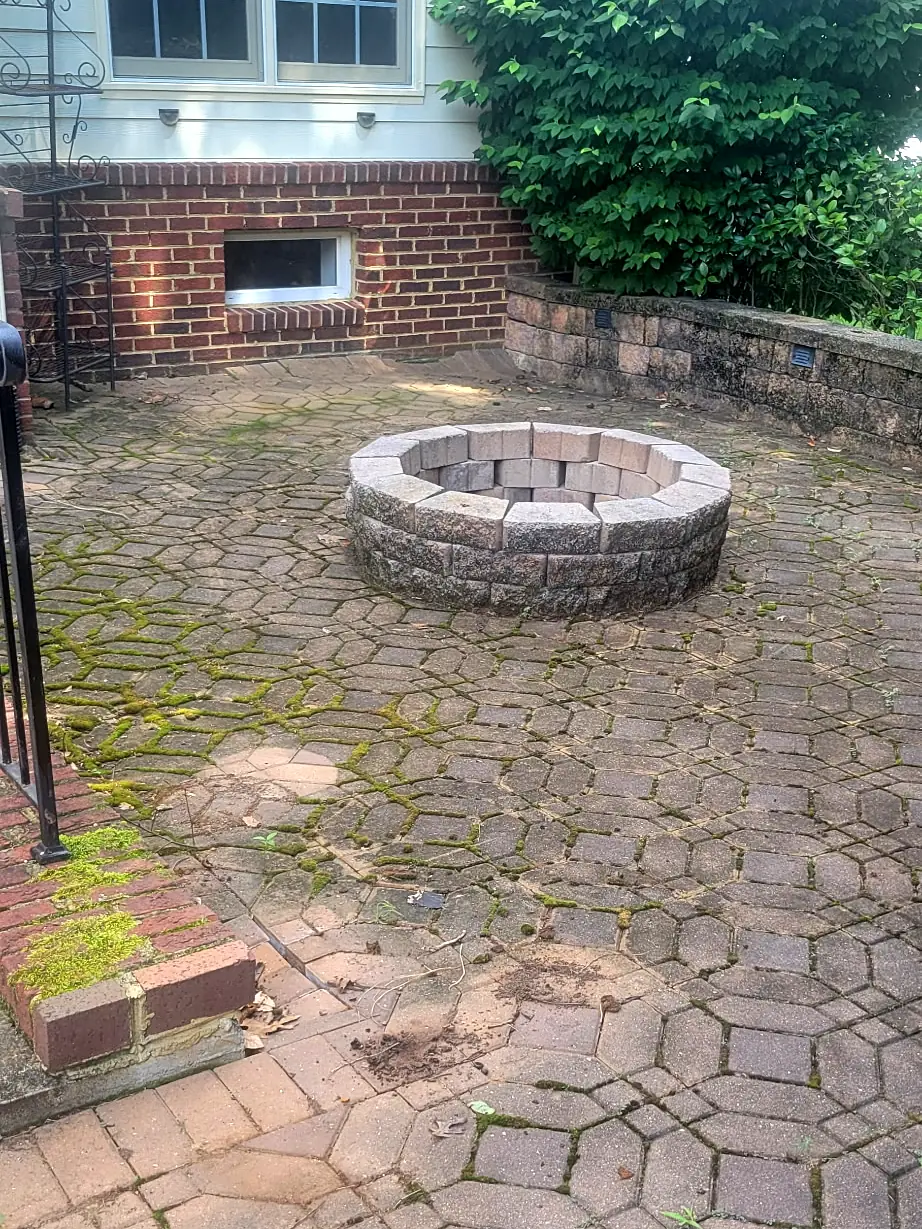
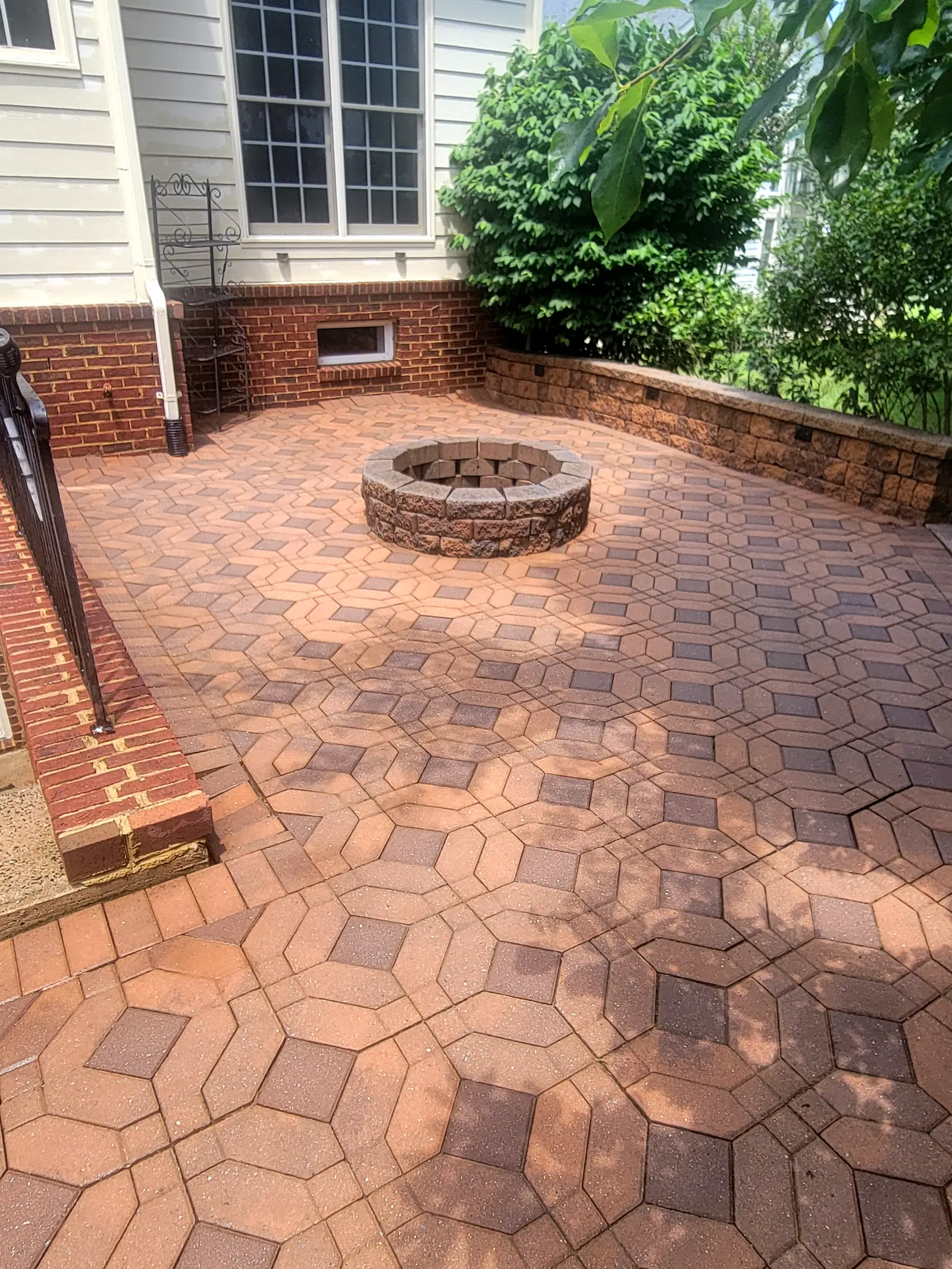
Joint sand locks pavers together and helps keep them from shifting. Over time, joints lose sand to rain and settling, and they fill with dirt, seeds and organic matter. That’s where weeds and moss take hold. Cleaning removes that growth, and some of the sand around it may go too.
- Regular joint sand washes out more easily than polymeric sand, which is designed to firm up once activated with water.
- Polymeric sand holds up better, but old or failing polymeric joints can crack and break loose.
- Re-sanding is a normal part of paver maintenance, and cleaning is the ideal time to do it, once the surface is fully dry.
Why is my patio slippery?
A slick patio is usually caused by algae or moss growing on a surface that stays damp and shaded. Cleaning the patio removes that film, which makes the surface look better and feel much less slick when wet.
Algae shows as a green or dark film, often thickest at the edges of the patio, around downspouts, under tree canopy and on the north side of the house. It holds water like a sponge, and on smooth concrete, stone or brick it can be genuinely slippery, especially on steps.
- Patios on the shaded side of a home or under mature trees.
- Low spots where water pools after rain.
- Areas next to downspouts and gutter overflow.
- Steps and landings, where a slip matters most.
What patio stains can pressure washing remove?
Pressure washing reliably removes algae, mildew, moss, pollen and most everyday dirt from patios. Grease, rust, some leaf and berry stains, and efflorescence are harder, and may lighten rather than disappear.
| Stain | Typical cause | What to expect |
|---|---|---|
| Green or black film | Algae, mildew, moss | Usually removes well |
| Yellow dust | Spring tree pollen | Removes well |
| Brown leaf shapes | Tannins from wet leaves | Often lightens significantly |
| Dark spots near the grill | Grease and food spills | May lighten; old grease can remain |
| Orange marks | Rust from furniture or fertilizer | Often needs separate treatment |
| White powdery haze | Efflorescence (mineral salts) | Can return as moisture moves through |
We’ll tell you honestly what to expect before we start, rather than overpromising on a stain that has soaked deep into the surface.
How should I prepare my patio for cleaning?
Clear the patio of furniture, grills, planters, rugs and cushions so the whole surface can be cleaned evenly. If some pieces are too heavy to move, mention it when you book with Ultimate Powerwash so we can plan around them.
- Move furniture and decor off the patio, or at least to one side. Items left in place leave clean outlines around them.
- Move the grill and cover or relocate cushions and outdoor rugs.
- Close nearby windows and doors, including sliding doors that open onto the patio.
- Point out drains, lighting and outlets near the surface.
- Keep pets and children indoors during the cleaning.
Our full checklist on preparing your home for pressure washing covers the rest.
When should you clean a patio in Virginia?
For most homes in Stafford, Fredericksburg and Northern Virginia, the best time to clean a patio is mid to late spring, after the heaviest pollen has fallen and before outdoor living season is in full swing. A second cleaning in early fall clears summer growth and grill season spills.
Spring in Virginia leaves a heavy yellow coat of tree pollen on every outdoor surface. Cleaning before that settles means cleaning twice, so we generally suggest waiting until it tapers off. After that, the patio stays presentable through graduations, cookouts and summer evenings.
- Before a gathering: schedule a few days ahead so the surface is dry and ready.
- Before sealing: if you plan to seal pavers or concrete, cleaning and full drying come first.
- Before listing a home: a clean patio helps outdoor space read as usable living space.
- Fall: clears summer algae and leaf stains before winter.
Many homeowners in Stafford and Fredericksburg combine patio cleaning with driveway cleaning or deck cleaning in one visit. When you’re ready, request a free patio cleaning quote.
How our patio cleaning process works
Identify the surface
We look at the patio material, its age and condition, the joints, and any sealer before choosing a method.
Prepare the space
We confirm furniture and grills are cleared, note nearby plants, drains and fixtures, and plan where rinse water will run.
Pre-treat organic growth
Where algae, mildew or moss are present, a cleaning solution suited to the surface is applied to loosen it first.
Clean evenly
We pressure wash with pressure matched to the material, keeping the finish even and taking care around joints and softer stone.
Rinse and review
We rinse the patio and surrounding surfaces, then walk through the results with you, including any joints that may need re-sanding.
What patio cleaning removes
- Green algae and moss in joints
- Mildew and dark organic staining
- Pollen and leaf tannin stains
- Ground-in dirt and foot traffic
- Weeds in paver and brick joints
- Grill and food spills (varies by stain)