
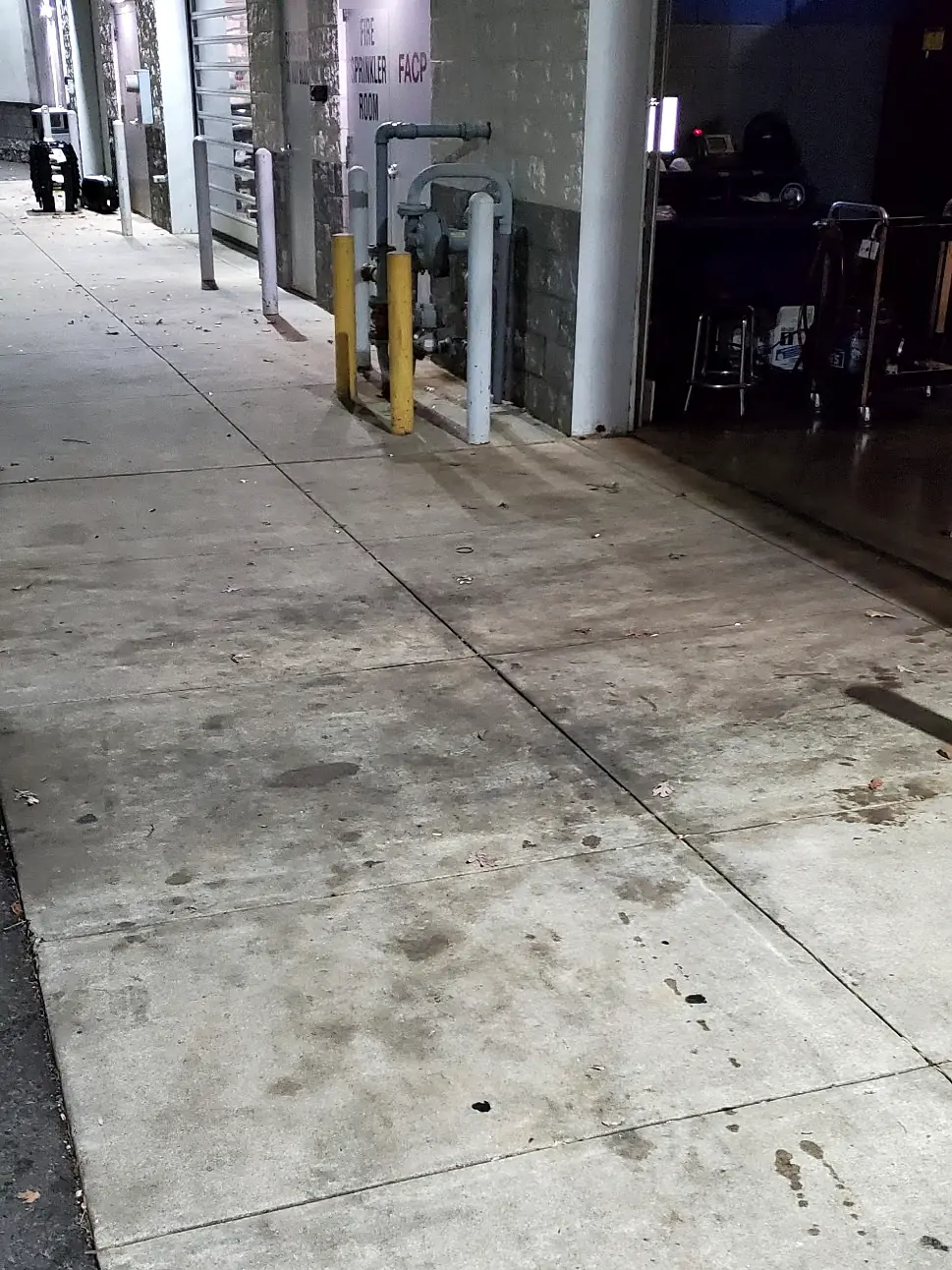
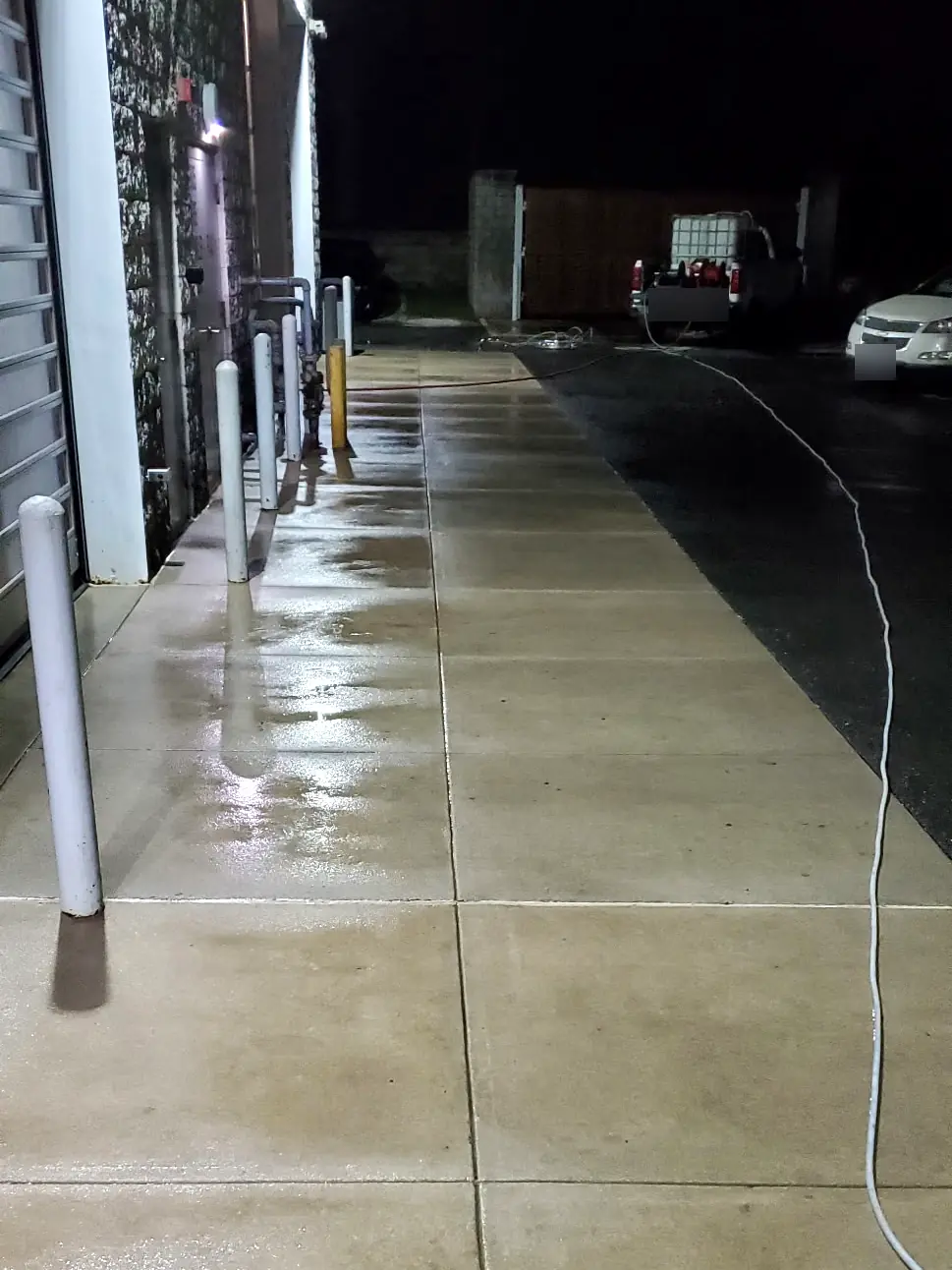
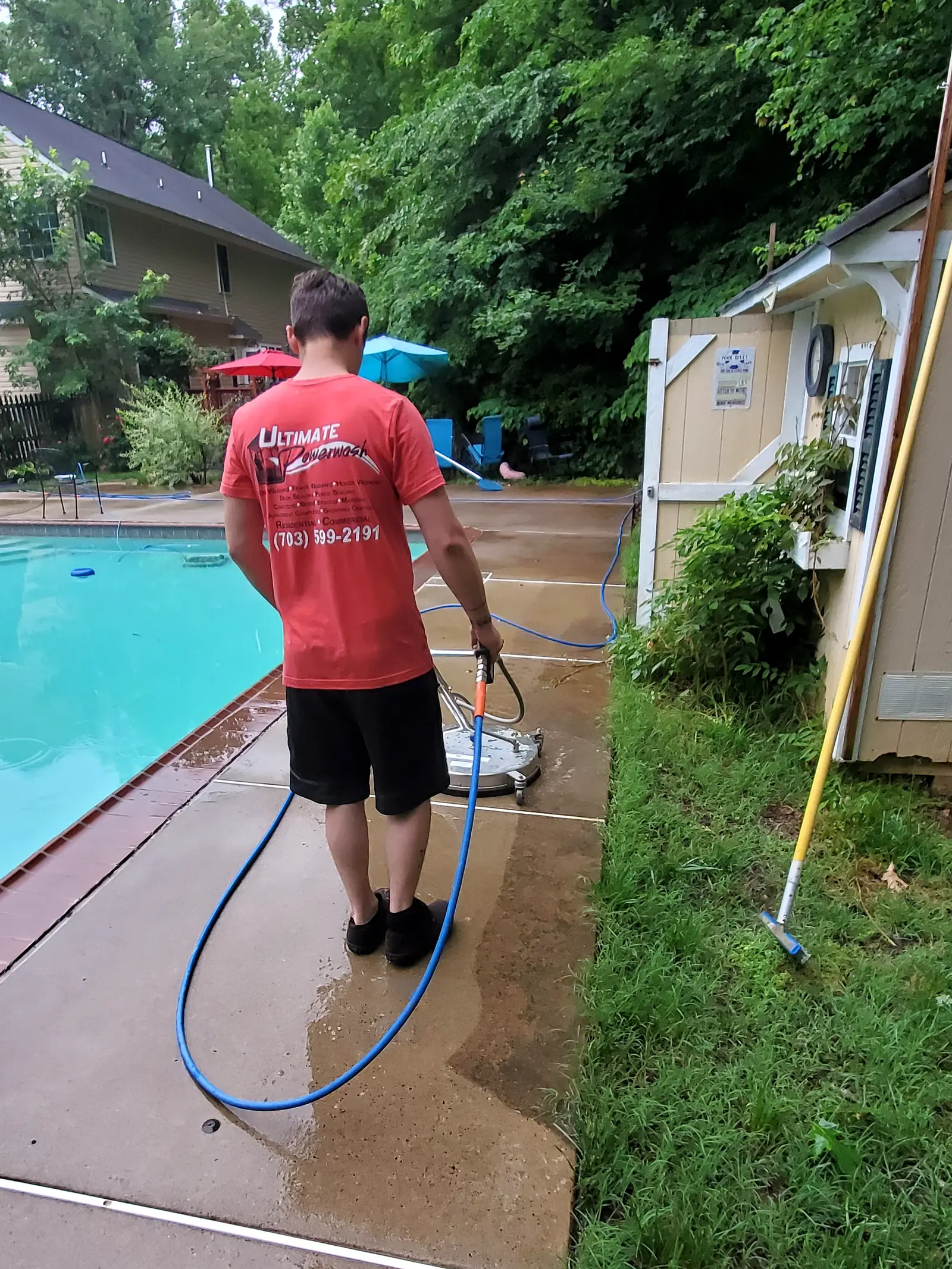
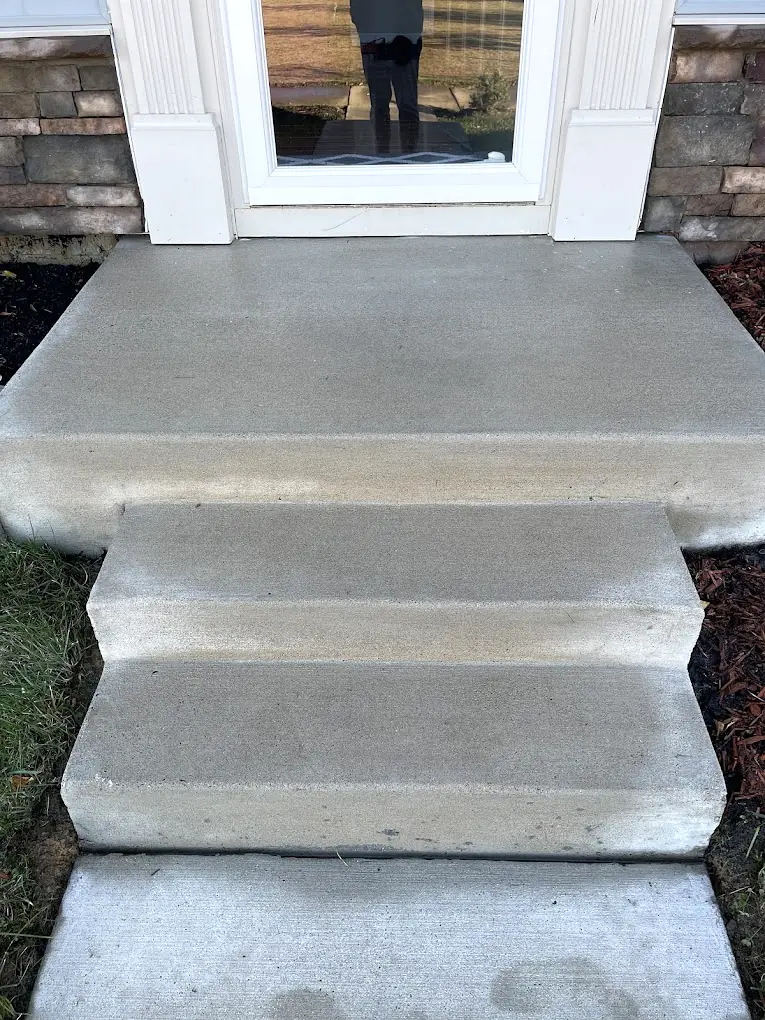
- Sidewalks and walkways
- Front steps and stoops
- Pool decks and surrounds
- Garage floors
- Brick walls and walkways
- Stucco walls
- Retaining walls and block
What does concrete cleaning cover?
Concrete cleaning covers the hard surfaces around a property other than the driveway: flat surfaces like sidewalks, steps, garage floors and pool surrounds, and vertical ones like brick, stucco and retaining walls. At Ultimate Powerwash, we treat each as its own material, not just “concrete”.
Walkways and steps collect foot traffic, algae and dirt. Brick and stucco carry organic growth, runoff stains and efflorescence. Retaining walls hold moisture from the soil behind them. Garage floors deal with oil and road grime. Each has its own problems, and each tolerates pressure differently.
Driveways bring their own vehicle-related issues, so we cover them separately on our driveway cleaning page. Outdoor living spaces have their own page for patio cleaning.
How should different concrete and masonry surfaces be cleaned?
The right approach depends on how hard, porous and old the surface is. Poured concrete flatwork usually takes full pressure through a surface cleaner, while brick, stucco and coated surfaces need lower pressure or soft washing.
| Surface | Common problems | Typical approach | Take care with |
|---|---|---|---|
| Sidewalks and walkways | Algae, dirt, gum, leaf stains | Surface cleaner at full pressure, pre-treatment for growth | Worn or older concrete |
| Steps and stoops | Slippery algae, dirt, rust from railings | Pressure with a wider tip, detail by hand | Edges and nosings that chip |
| Pool surrounds | Algae, sunscreen and body-oil residue | Moderate pressure, careful rinse | Runoff into the pool; deck coatings |
| Garage floors | Oil, tire marks, road salt residue | Degreaser, hot water where suited, controlled rinse | Drainage path, epoxy or painted coatings |
| Brick | Algae, dirt, efflorescence | Low to moderate pressure with a cleaning solution | Soft or older brick, weathered mortar |
| Stucco | Algae, mildew, runoff streaks | Soft washing and a gentle rinse | Cracks, synthetic stucco (EIFS) |
| Retaining walls | Moss, algae, efflorescence, soil stains | Solution plus moderate pressure, matched to block type | Drainage weep holes, loose caps |
What is the white powder on brick and concrete?
That white, powdery or crystalline deposit is usually efflorescence: water-soluble salts carried to the surface by moisture and left behind when the water evaporates. Surface deposits can usually be cleaned off, but they tend to return while moisture keeps moving through the masonry.
Brick, mortar, concrete block and poured concrete all contain naturally occurring salts. When water soaks in, from rain, soil contact or a leak, it dissolves those salts and carries them outward. As the surface dries, the water evaporates and the salts stay behind as a white bloom. It is common on new masonry, on retaining walls with wet soil behind them, and after long wet spells.
- It is white or grayish and powdery or crystalline, not green, black or slimy.
- It often shows up after wet weather and near where water enters, such as below caps and around downspouts.
- It may partially dissolve when wet and reappear as the surface dries.
Can pressure washing etch concrete?
Yes. A narrow tip held too close can cut through the top layer of cement paste and leave permanent lines, blotches or exposed aggregate. Using surface cleaners, wider tips and sensible distances prevents it.
The smooth top of a concrete slab is a thin layer of cement paste over sand and stone. It is the first thing to wear away, and it is what high pressure attacks when misused. Once it is etched, the damage can’t be washed away; it is part of the surface.
- Older, weathered or poorly finished concrete etches more easily than sound concrete.
- Newly poured concrete needs to cure before any aggressive cleaning. Concrete is commonly considered to reach its design strength at about 28 days.
- Vertical surfaces and masonry generally need less pressure than flatwork.
- Round surface cleaners avoid the stripes and wand marks that handheld cleaning can leave.
Our guide on how to clean concrete explains the trade-offs between pressure, heat and cleaning solutions.
How are brick and stucco cleaned without damage?
Brick and stucco are cleaned with lower pressure and more reliance on cleaning solutions than concrete flatwork. Both can be damaged by high pressure, and stucco in particular can crack or take on water.
Brick
Modern brick is usually hard-fired and durable, but mortar joints are softer than the brick around them. Older, softer brick and weathered mortar, which you’ll find on many older homes around Fredericksburg’s historic downtown, can be eroded by a careless jet. We clean brick at reduced pressure with a solution doing more of the work, and we avoid aiming directly into weak joints.
Stucco
Stucco’s texture traps dirt and organic growth deep in its surface, and hairline cracks give water a path inside. Synthetic stucco systems (EIFS) are especially vulnerable to high pressure. For stucco walls we rely on our soft washing service, which cleans with a solution and a gentle rinse.
What about garage floors and pool surrounds?
Garage floors need attention to oil, tire marks and where the rinse water will go. Pool surrounds need care to keep cleaning solutions and debris out of the pool and to protect any deck coating.
Garage floors
Oil and fluid drips, tire marks and winter road salt residue build up on garage slabs. A degreaser, and hot water where suited, help lift them. Because a garage is enclosed, the rinse water needs a clear path out, and stored items near the floor need to be moved or raised. Painted or epoxy-coated floors need a gentler approach so the coating isn’t lifted.
Pool surrounds
Shaded pool decks grow algae that makes wet concrete slippery. The general practice is to direct runoff away from the pool, keep cleaning solutions out of the water, and use moderate pressure on decorative finishes and deck coatings, which can be damaged by a full-pressure blast.
How is concrete cleaning different from driveway cleaning?
Driveway cleaning focuses on one large, flat slab and vehicle-related stains like oil and tire marks. Concrete cleaning spans many smaller, mixed surfaces, both flat and vertical, where masonry issues like efflorescence and delicate materials like stucco call for more varied methods.
A single visit might include a front walk at full pressure, brick steps at reduced pressure, a stucco foundation wall soft washed, and a garage floor with a degreaser. That variety is where experience matters, and our team brings 30+ years of combined pressure washing experience to it. See our work in Stafford and Fredericksburg, or request a free concrete cleaning quote. Our work is satisfaction guaranteed.
How our concrete cleaning process works
Identify each material
We look at every surface’s material, age and condition, including cracks, loose mortar, coatings and signs of efflorescence.
Prepare and protect
Items are cleared, plantings and nearby surfaces are protected, and runoff is directed away from pools, beds and garage contents.
Pre-treat or dry-brush
Organic growth and stains get a cleaning solution or degreaser with time to work, and loose efflorescence is brushed off before water is applied.
Clean with matched pressure
Flatwork is cleaned with a surface cleaner, while brick, stucco and coated surfaces get lower pressure or soft washing.
Rinse and inspect
Surfaces are rinsed clear of residue and debris, and we check for missed areas before we leave.
What concrete cleaning removes
- Efflorescence
- Algae, moss and lichen
- Mildew-type organic growth
- Ground-in dirt
- Rust and fertilizer stains
- Oil and vehicle fluid drips
- Red clay staining
- Chewing gum