
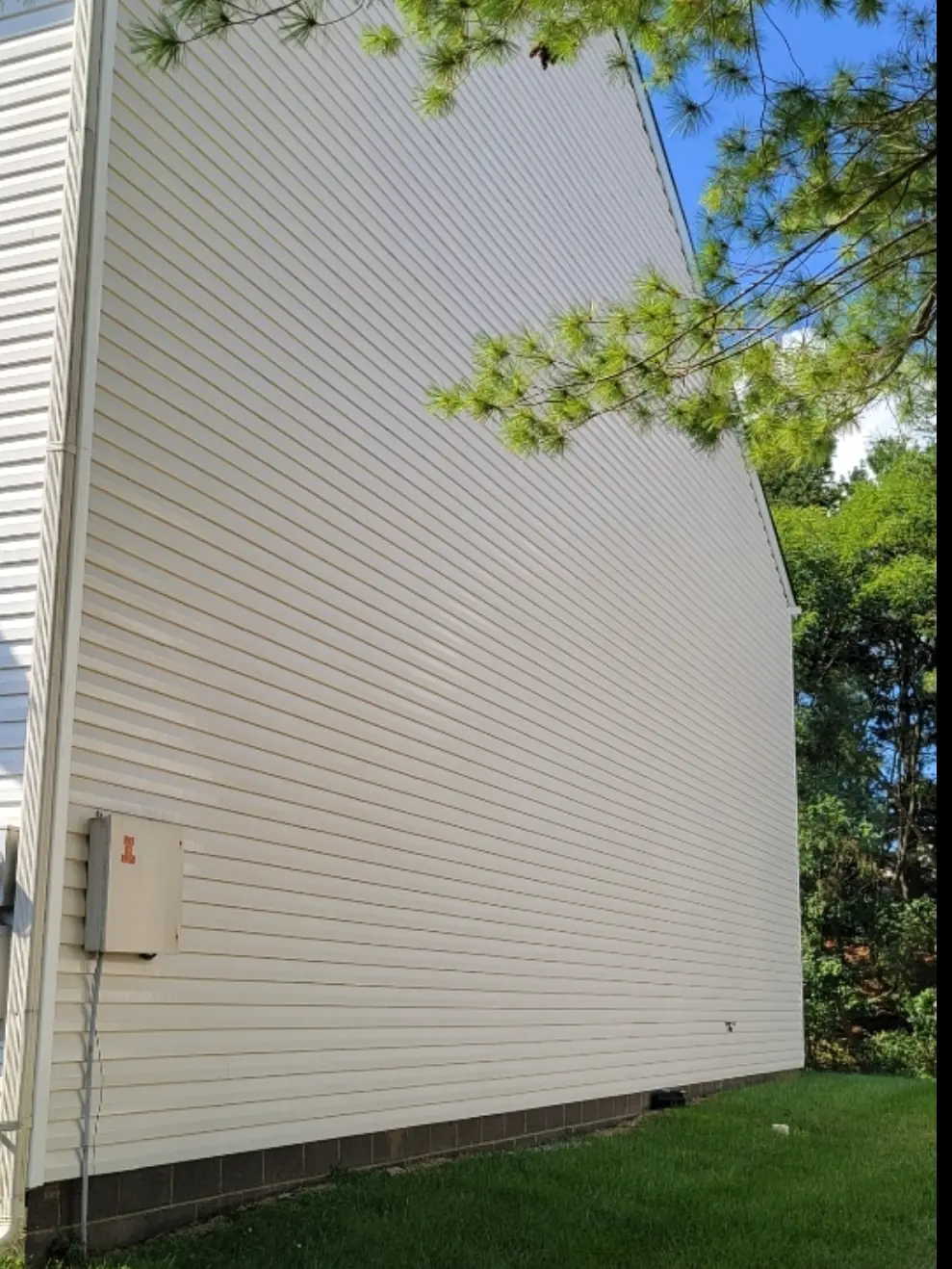
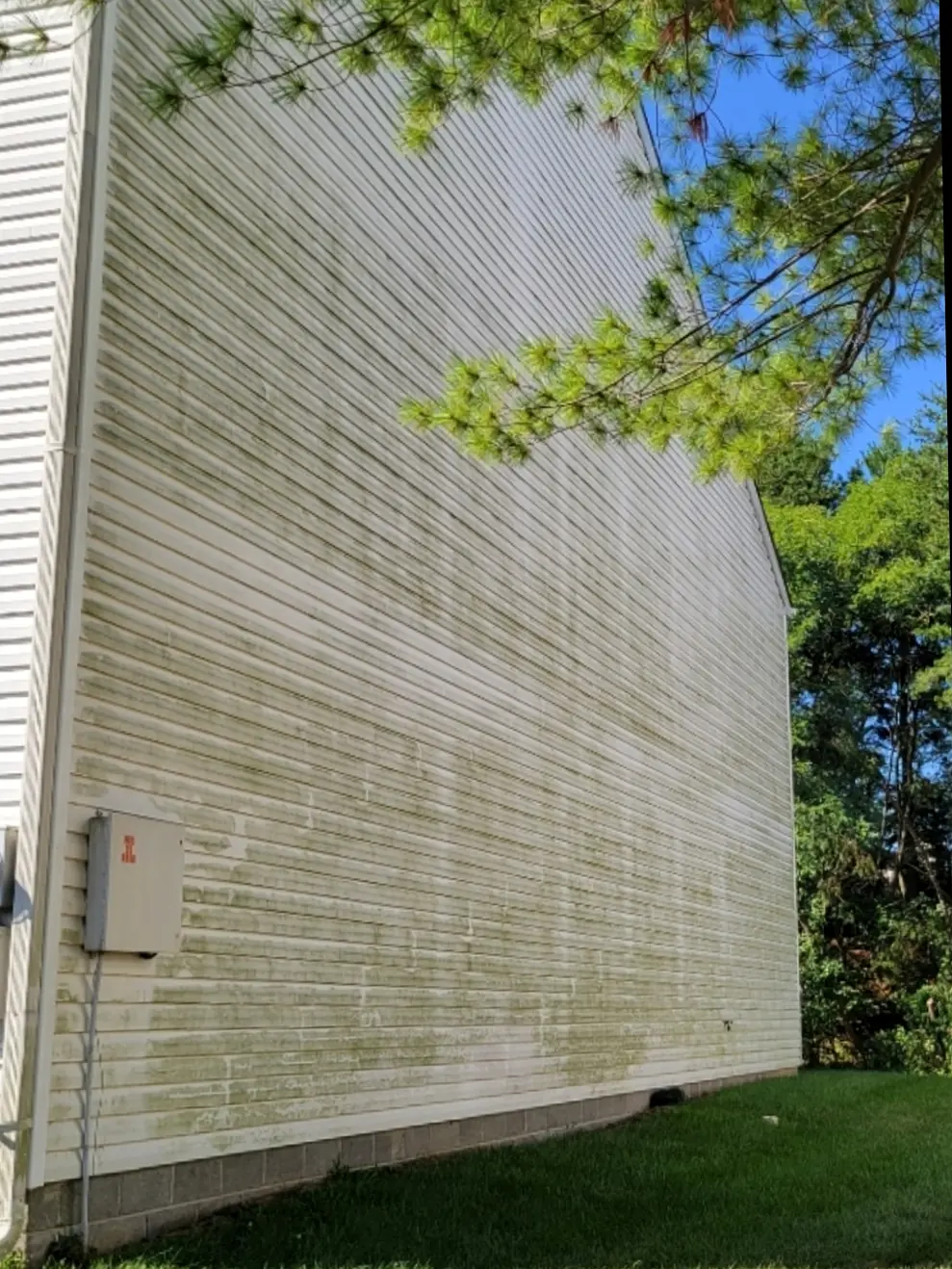
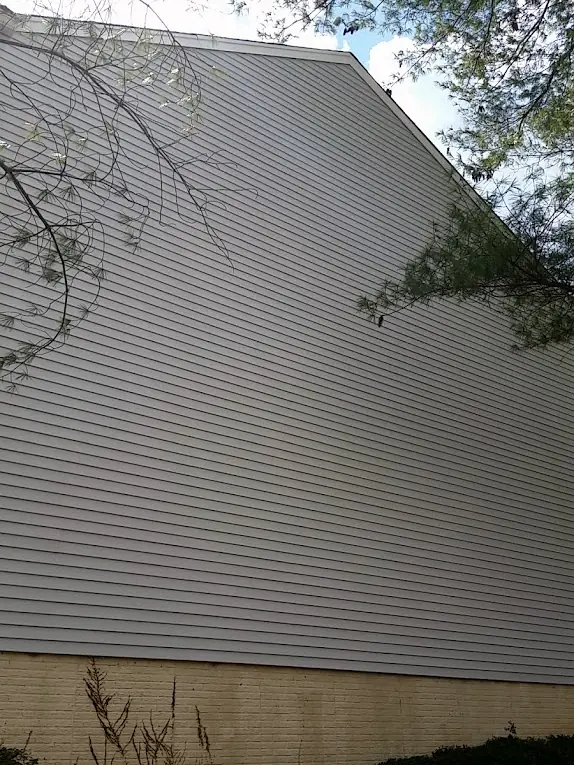
- Vinyl siding
- Aluminum siding
- Painted wood and fiber cement siding
- Stucco and synthetic stucco (EIFS)
- Painted trim, soffits and fascia
- Wood fences and decks (low-pressure washing)
What is soft washing?
Soft washing is a cleaning method that applies a diluted cleaning solution at low pressure, gives it time to break down organic growth, and then rinses the surface gently. The solution does the cleaning, so the surface never takes the force of a high-pressure jet.
Soft washing was developed for surfaces that high-pressure cleaning tends to damage. Rather than blasting growth off, a soft wash system delivers solution through wide, low-pressure nozzles at roughly the force of a garden hose. The solution clings to the surface, loosens the growth and grime, and a low-pressure rinse carries it away.
Across the industry, many soft wash solutions are built on a diluted sodium hypochlorite base, the same active ingredient found in household bleach, with a surfactant that helps the mix cling and spread. The strength is adjusted to the surface and the type of growth. The term “low-pressure washing” is often used for the same idea on wood, where a gentle rinse replaces the blast.
How is soft washing different from pressure washing?
Pressure washing cleans with force; soft washing cleans with chemistry and time. Pressure washing suits hard surfaces like concrete, while soft washing is the safer choice for siding, stucco and painted surfaces.
- How it cleans
- Pressure washing knocks dirt loose with high-pressure water. Soft washing dissolves and loosens growth with a solution, then rinses.
- Pressure
- Pressure washing on concrete commonly runs at several thousand PSI. Soft washing stays near garden-hose pressure.
- Best surfaces
- Pressure washing: concrete, brick, stone. Soft washing: vinyl, aluminum, painted wood, fiber cement, stucco.
- Effect on growth
- Pressure removes what it hits. A solution also treats the growth embedded in texture and seams.
Neither method is better in every case; they are tools for different materials. We use pressure washing on concrete and hard surfaces and soft washing on walls, often on the same property. Our article on soft washing vs. pressure washing goes deeper.
Which surfaces are best suited to soft washing?
Soft washing is best suited to vinyl and aluminum siding, painted wood and fiber cement, stucco, and painted trim and soffits. These materials can crack, peel or take on water under high pressure, but respond well to a solution and a gentle rinse.
- Vinyl siding
- The most common siding on newer homes in the region. Soft washing reaches into the laps and texture without forcing water behind the panels.
- Painted wood and fiber cement
- Low pressure cleans the paint film without lifting it or scarring softer wood.
- Stucco and EIFS
- Textured stucco holds dirt and growth deep in its surface. Synthetic stucco (EIFS) is especially vulnerable to high pressure.
- Aluminum siding
- Often chalky with age. A gentle approach avoids streaking the weathered finish.
- Wood fences and decks
- Low-pressure washing protects the grain. See our fence cleaning service for details.
What kinds of organic growth does soft washing remove?
Soft washing targets algae, mildew, lichen and similar organic growth, along with the dirt and pollen they trap. Each looks and behaves differently, which affects how it is treated and how quickly it comes back.
- Algae
- The green film common on vinyl siding, especially on shaded and north-facing walls that stay damp longer.
- Mildew
- A surface fungus that appears as gray or black spotting, often under eaves and on trim.
- Gloeocapsa magma
- A cyanobacterium commonly responsible for the black streaks seen running down asphalt shingle roofs.
- Lichen
- A partnership of a fungus with an alga or cyanobacterium. It forms crusty, gray-green patches that grip tightly and can take time to release after treatment.
- Moss
- A small plant, not a stain. It grows in thick, damp, shaded spots and may need more than a single wash.
Why do dwell time and rinsing matter in soft washing?
The solution needs a few minutes on the surface to break down growth, and then it needs a thorough rinse. Skipping either step leaves growth behind or leaves residue that can streak.
Dwell time is the period the solution sits on the surface before rinsing. Too short, and stubborn growth survives. Too long in direct sun, and the solution can dry in place, which risks streaking. Virginia summers are hot and humid, so careful crews work in manageable sections and watch how quickly each wall is drying.
The rinse is just as important. A low-pressure rinse flushes loosened growth, dirt and remaining solution off the siding, trim and window frames, working from top to bottom so dirty water isn’t left behind on clean surfaces.
How are plants and landscaping protected during soft washing?
Careful soft washing protects landscaping by wetting plants before and after application, managing runoff and taking extra care around sensitive plants. We treat the surroundings as part of the job, not an afterthought.
Common professional practices for protecting landscaping include:
- Soaking plants and beds with clean water before cleaning, so leaves and soil take up less solution.
- Rinsing plants, lawn edges and mulch again after the walls are rinsed.
- Covering delicate or prized plants where it makes sense.
- Keeping runoff away from ponds, vegetable gardens and storm drains where possible.
- Adjusting solution strength to the growth, rather than using more than the job needs.
If you have plants you’re especially concerned about, tell us when you request a free quote so we can plan around them.
Why do soft washing results tend to last longer than blasting?
High pressure removes the growth it hits, but it can leave living growth in seams and texture that quickly regrows. Soft washing treats the growth itself, so surfaces usually stay clean longer between washes.
Algae and mildew don’t just sit on top of siding. They settle into the textured grain of vinyl, the pores of stucco and the gaps between laps. Blasting knocks off the visible layer, and what remains can turn green again within a season. Because a soft wash solution reaches into those spaces, the growth has to re-establish itself from scratch.
How long a result lasts still depends on the site. Factors that bring growth back sooner include:
- Heavy shade from nearby trees.
- North-facing walls that stay damp longer.
- Sprinklers that wet the siding.
- Poor drainage or gutters that overflow onto walls.
Soft washing for homes in Stafford, Fredericksburg and Northern Virginia
Ultimate Powerwash has soft washed homes and businesses in the region since 2005. Wooded lots, humid summers and heavy spring pollen make soft washing the practical choice for most siding here.
Much of our soft washing is part of full exterior house washing in Stafford and nearby, where vinyl-sided homes on tree-lined lots collect algae on their shaded sides. We also soft wash stucco, painted wood and aluminum siding throughout Stafford County and the Fredericksburg area. Our work is satisfaction guaranteed.
How our soft washing process works
Inspect surfaces and growth
We identify the siding material, its condition and the type of growth, which guides the solution strength and approach.
Protect the surroundings
Plants are wetted, runoff paths are considered, and fixtures, vents and outlets are noted before any solution goes on.
Apply solution at low pressure
A cleaning solution suited to the surface is applied through low-pressure equipment, working in sections.
Allow dwell time
The solution is given time to loosen growth and grime, while we watch that it doesn’t dry on the surface.
Rinse thoroughly
Walls are rinsed top to bottom at low pressure, and nearby plants and surfaces are rinsed again.
What soft washing removes
- Green algae
- Mildew
- Lichen
- Organic staining
- Pollen
- Spider webs and insect residue
- Airborne dirt and grime