
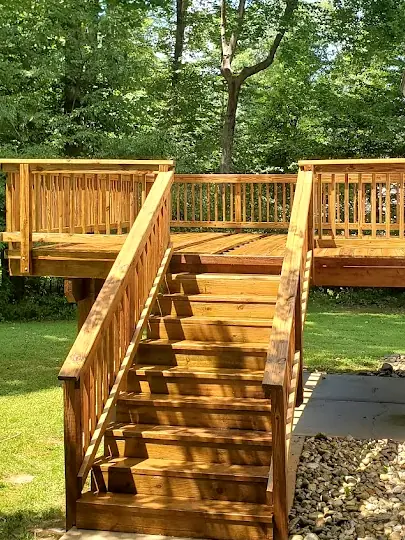
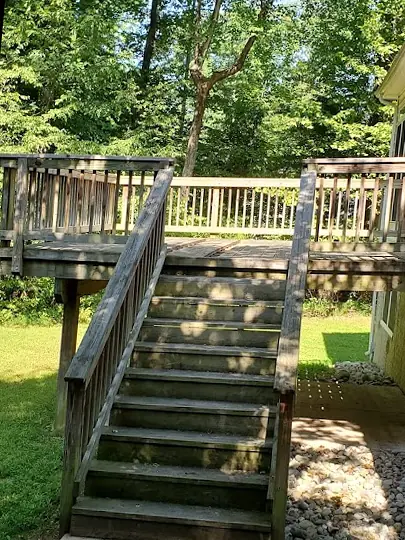
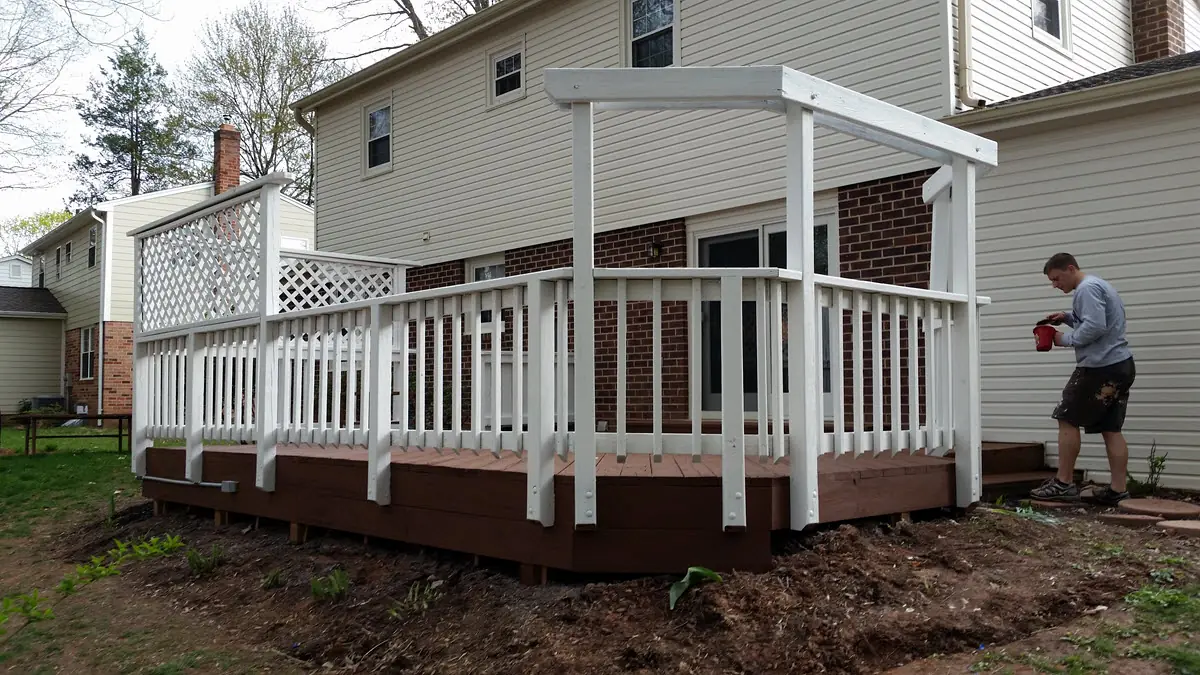
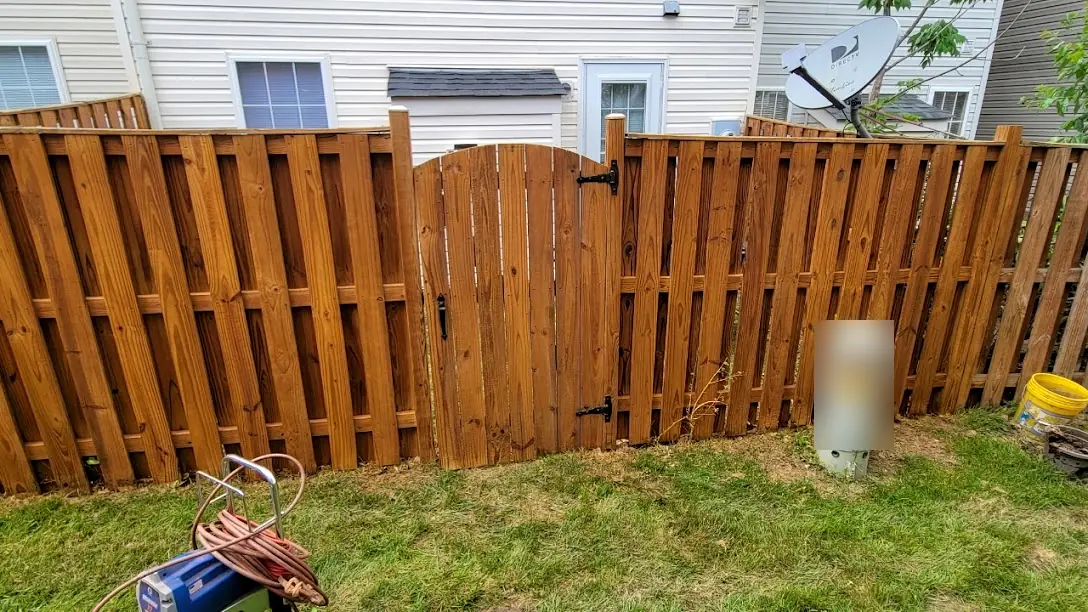
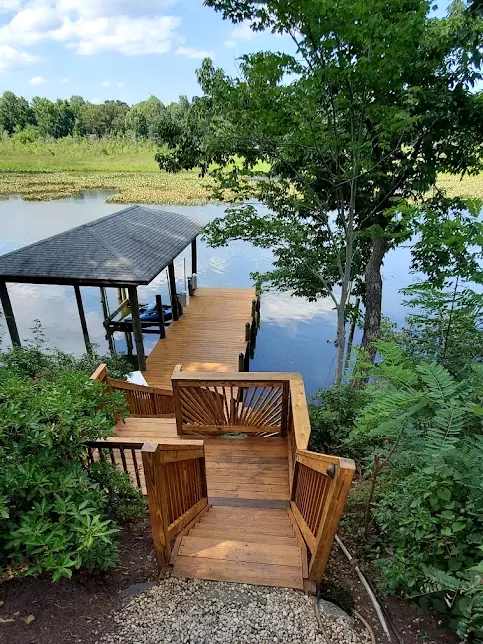
- Pressure-treated pine decks
- Cedar decks and fences
- Wood privacy and picket fences
- Deck railings, stairs and balusters
What does deck and fence staining and sealing include?
Deck and fence staining and sealing means cleaning the wood, letting it dry, and applying a stain or sealer that adds color and protects the wood from sun and moisture. Ultimate Powerwash offers staining and sealing for decks and fences with 150+ stain colors available.
Staining is a restoration project, not a quick coat of color. Each step affects how the finish looks and holds up.
- Assessment: look at the wood, the existing finish, and any peeling, graying or mildew.
- Cleaning: a low-pressure deck cleaning or fence cleaning to remove growth, grime and weathered fibers.
- Drying: give the wood time to dry before any finish goes on.
- Color and product selection: choose the opacity and color that fit the wood and the look you want.
- Application: apply the finish evenly to boards, rails, posts and stairs.
With more than 150 colors available, there is room to match the house trim, warm up a gray deck, or keep the natural look of the wood. We can walk you through options that suit your wood and your home. You can also browse our project gallery.
Why does a deck need to be cleaned before staining?
Stain needs to soak into bare, clean wood to bond and look even; dirt, algae, mildew and gray weathered fibers block it and cause blotchy color and early failure. That is why Ultimate Powerwash cleans every deck and fence before applying a finish.
Staining over a dirty deck seals the problem in. Mildew under a finish can show through as dark spots. Loose, weathered fibers take stain unevenly and then wear away, taking the color with them. Old, failing finish that isn’t addressed can cause the new coat to peel.
The cleaning method matters as much as the cleaning. High pressure can leave the wood fuzzy and gouged, and those marks show clearly through stain, especially lighter, more transparent colors. We use low-pressure washing on decks and fences for exactly this reason. For the full explanation, see can you pressure wash a deck without damaging it.
How long should wood dry before staining?
Wood should be thoroughly dry before stain is applied, and the stain manufacturer’s instructions set the minimum. After washing, that commonly means at least a day or two of dry weather, and often longer in shade, after rain, or during humid Virginia summers.
Stain applied to damp wood can’t penetrate properly, and there is no single number of hours that fits every deck. Drying depends on the conditions.
- Sun and shade: a deck in full sun can dry faster than a fence along a wooded lot line.
- Humidity and dew: muggy weather and heavy morning dew slow drying.
- Rain: a storm after cleaning resets the clock.
- New lumber: many stain manufacturers recommend letting new pressure-treated wood dry out before its first finish, so check the label if your deck or fence is recently built.
Transparent vs semi-transparent vs solid stain: which is best?
The best stain depends on the condition of the wood and the look you want: transparent shows the most grain, semi-transparent balances color and grain, and solid covers the wood most like paint. More pigment generally means more protection from sunlight but less visible grain.
| Type | Look | Best for | Trade-offs |
|---|---|---|---|
| Clear sealer / water repellent | Natural wood, no added color | New or like-new wood you want to keep natural | Little pigment, so limited UV protection; wood can still gray |
| Transparent / toned | Full grain with a light tint | Newer wood in good condition | Light pigment; typically needs refreshing more often |
| Semi-transparent | Visible grain with richer color | Most decks and fences in fair to good condition | Balanced protection; shows some imperfections |
| Solid | Opaque color, grain texture only | Older or weathered wood, or matching trim | Most UV protection; forms a film that can peel if moisture gets under it |
Transparent and semi-transparent stains are typically penetrating finishes that soak into the wood. Solid stains sit more on the surface, which gives them their coverage but also means they can peel if the wood underneath stays wet. Switching from a solid stain back to a transparent one is difficult, because the old pigment has to come off first.
What is the difference between sealing and staining?
Sealing mainly protects wood from water, while staining adds pigment that colors the wood and blocks sunlight. Many products do both to some degree, and Ultimate Powerwash can help you decide which approach fits your deck or fence.
- Sealer
- Usually clear or nearly clear. Its main job is repelling water so the wood absorbs less moisture, swells less and resists mildew better. With little or no pigment, it does little to stop sun graying.
- Stain
- Contains pigment. The pigment adds color and absorbs or blocks UV light, which is what slows graying. Many stains also include water-repellent ingredients.
Many products combine color and water repellency, which is why the terms are often used together. On most open, sunny decks, more pigment offers more protection.
How do Virginia sun and moisture affect wood decks and fences?
In Virginia, wood is attacked from two sides: strong summer sun breaks down the surface fibers and fades finishes, while humidity, rain, dew and shade keep wood damp enough for algae and mildew. A good stain slows both, which is why staining matters here.
- Sunlight (UV): breaks down lignin at the wood surface, which turns unprotected wood gray and fades stain over time.
- Moisture cycles: wood swells when wet and shrinks when dry. Repeated cycles open cracks and checks, and winter freeze-thaw adds stress.
- Humidity and shade: hot, humid summers and shaded yards let algae and mildew settle into the grain.
- Spring pollen: a heavy yearly coat that holds moisture and feeds organic growth.
Deck boards take the worst of it. Horizontal surfaces catch direct sun, standing water, snow and foot traffic, while vertical fence boards shed water and get less direct overhead sun. That is why a deck finish usually wears faster than the same finish on a fence. For timing your project, see the best time of year for exterior cleaning in Virginia.
How long will a deck or fence stain last?
There is no single answer, because stain life depends on the product, the opacity, the prep, the wood and how much sun and traffic the surface gets. Ultimate Powerwash can walk you through the factors that affect your deck or fence so you know what to watch for.
- Opacity: more pigment generally holds color longer against the sun.
- Surface prep: clean, dry, sound wood gives any stain its best chance.
- Exposure: full-sun decks fade faster than shaded fences.
- Foot traffic: steps, doorways and grill areas wear first.
- Wood condition: weathered, porous wood absorbs stain differently from new boards.
Signs it’s time to refresh include fading, graying showing through, water soaking in instead of beading, and wear on high-traffic areas. Homeowners in Stafford and Fredericksburg often plan staining for spring or early fall when temperatures are mild. When you’re ready, request a free staining and sealing estimate.
How our deck & fence staining and sealing process works
Assess the wood and finish
We look at the wood species, its condition, any existing finish, and signs of peeling, graying or mildew before recommending an approach.
Choose a finish and color
We talk through opacity and color options, with 150+ stain colors available, based on your wood and the look you want.
Clean with low pressure
The deck or fence is cleaned with low-pressure washing to remove growth, grime and weathered fibers without damaging the wood.
Let the wood dry
The wood is given time to dry before any finish goes on, following the product’s requirements and the weather.
Apply the stain or sealer
The finish is applied evenly to boards, rails, posts and stairs, with attention to nearby siding, plants and surfaces. Satisfaction guaranteed.
What deck & fence staining and sealing removes
- Gray, sun-weathered wood
- Algae and mildew in the grain
- Faded or worn previous finish
- Pollen and embedded dirt