
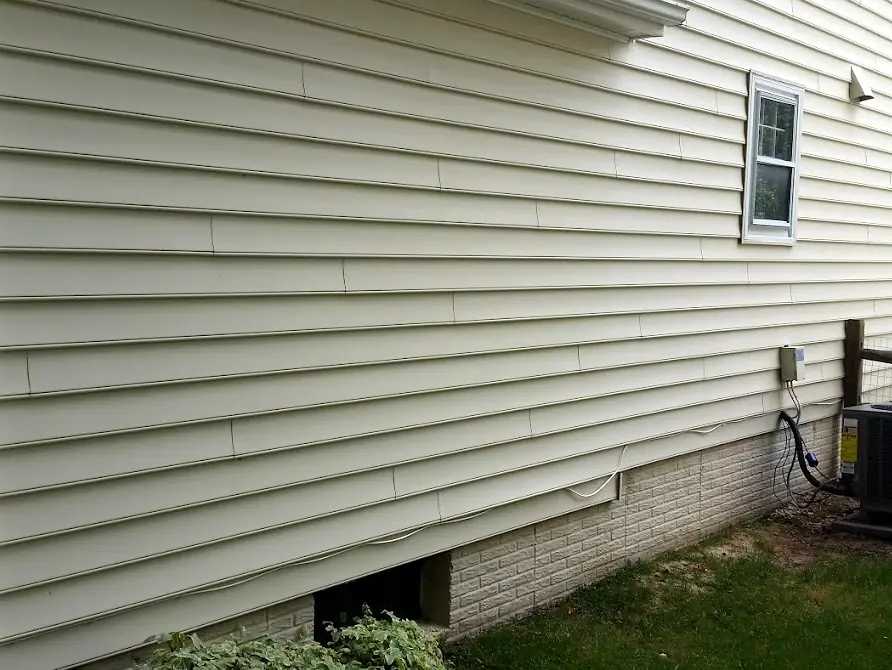
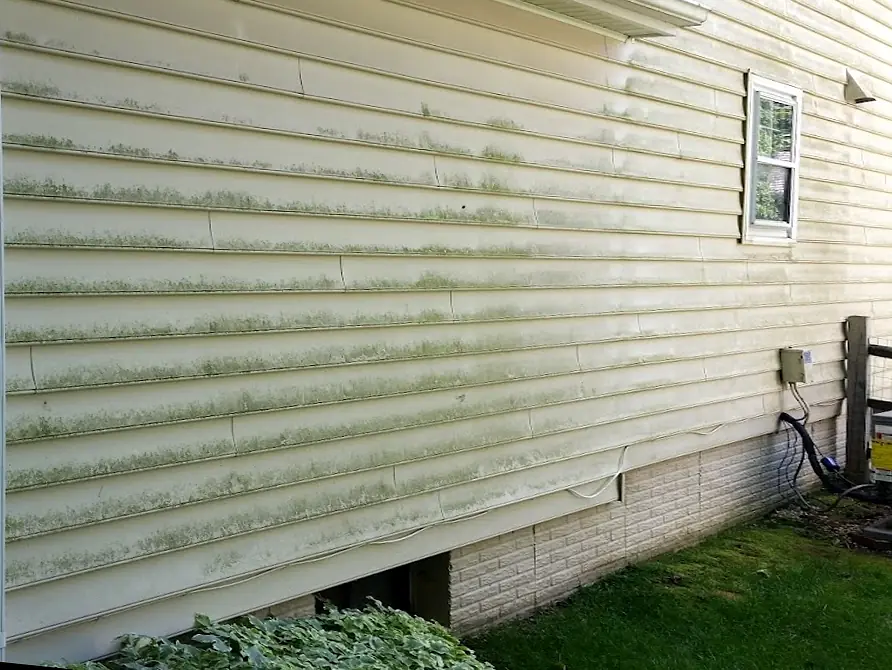
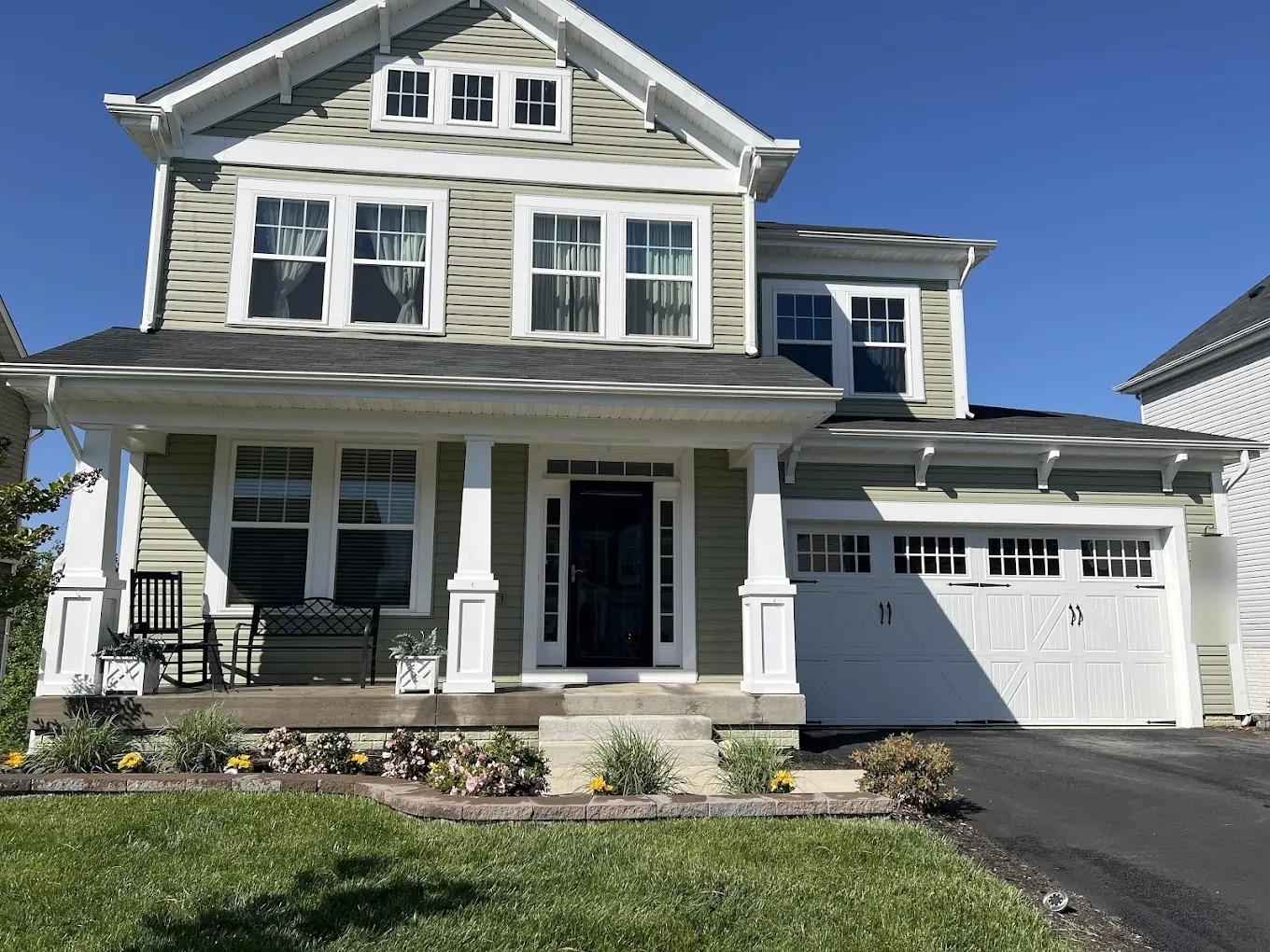
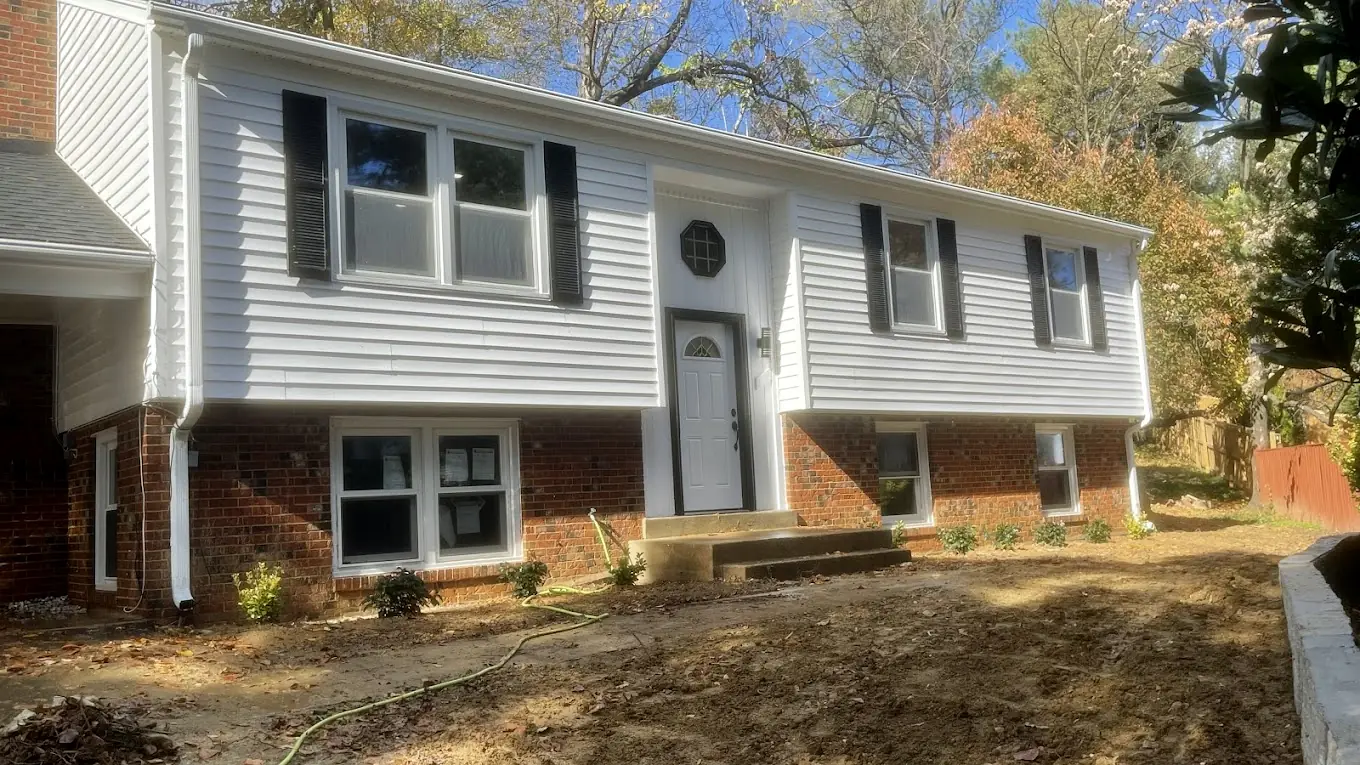
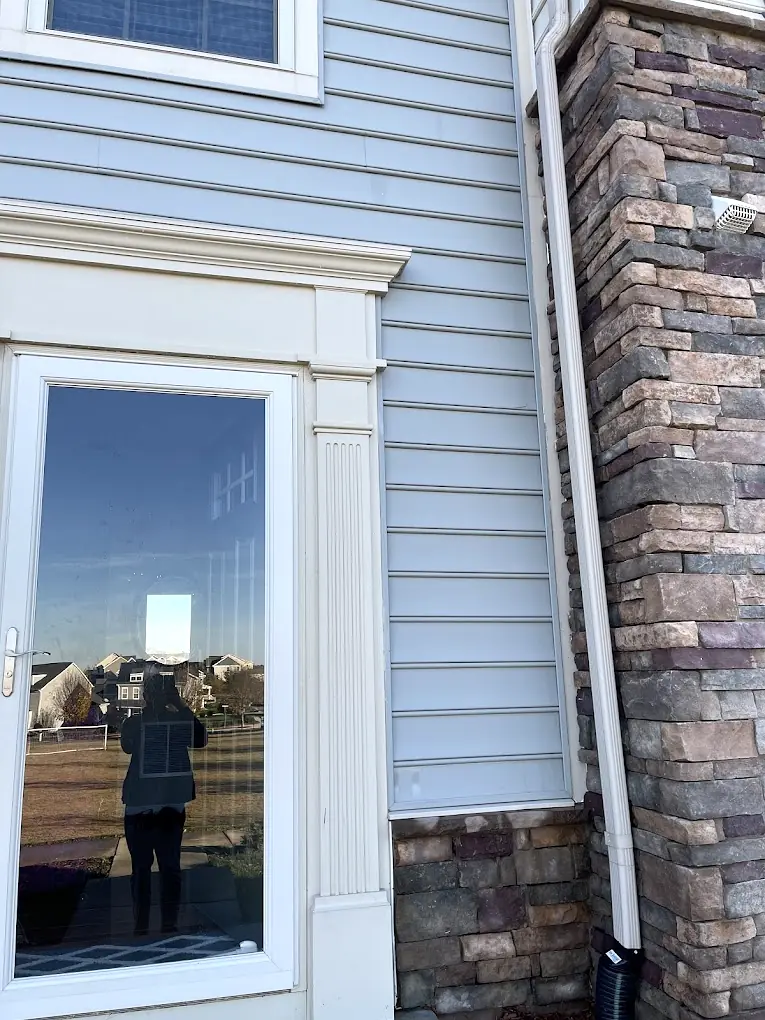
- Vinyl siding
- Aluminum siding
- Fiber cement siding
- Painted wood siding and trim
- Brick
- Stucco
- Soffits and fascia
What is professional house washing?
Professional house washing is the cleaning of a home’s exterior walls and trim to remove organic growth, dirt, pollen and other buildup, using a method suited to each material. At Ultimate Powerwash, that usually means soft washing the siding at low pressure, with higher pressure reserved for durable surfaces.
A house wash is not the same as aiming a pressure washer at the siding. The goal is to clean the whole exterior envelope evenly, from the soffits down to the foundation line, without cracking panels, lifting paint or pushing water into the walls. That takes the right equipment, the right solution strength and a deliberate order of work.
A thorough house wash addresses:
- Siding on every elevation, including shaded sides that are easy to overlook.
- Soffits and fascia, where webs, mildew and insect residue collect.
- Window and door trim, shutters and exterior frames.
- Foundation walls and the lower courses of siding, where soil and red clay splash up in heavy rain.
What causes the green, black and gray stains on siding?
The green film on siding is usually algae, while gray or black spotting is often mildew, a surface fungus. Both thrive on damp, shaded walls, and they trap dirt and pollen that make the discoloration worse.
Organic staining is the general term for discoloration caused by living growth rather than dirt alone. Here’s how to tell the most common culprits apart on a house in Virginia:
- Algae
- A green, sometimes slightly slimy film that spreads across vinyl and painted siding. It is the most common thing homeowners notice first.
- Mildew
- Gray or black speckling, often under eaves, behind shrubs and around trim where air moves less.
- Dirt and grime
- A dull, even gray film from airborne dust, road grime and exhaust, usually heaviest near driveways and roads.
- Pollen
- A yellow-green coating each spring. On its own it rinses off fairly easily, but it gives algae and mildew something to feed on.
- Red clay splash-back
- Orange-brown staining along the bottom courses of siding and foundation, from rain striking bare soil or mulch beds.
- Spider webs and insect residue
- Webs, egg sacs and droppings concentrated around lights, soffits and corners.
Why one side of the house looks worse
Exterior discoloration is rarely even. Virginia summers are hot and humid, and shaded or north-facing walls stay damp longer after rain and morning dew, so they tend to grow algae and mildew first. Walls behind dense shrubs, under large trees, beside sprinklers or below overflowing gutters follow close behind. Our guide to black and green stains on siding explains the differences in more depth.
What is oxidation or chalking on vinyl and aluminum siding?
Oxidation, often called chalking, is a powdery residue that forms as sunlight and weather break down the outer surface of siding or its finish. Washing can remove loose chalk, but it cannot restore color that has faded, so we look at chalky siding carefully before cleaning it.
A simple test: rub a clean finger across a sunny wall. If it comes away coated in a fine white or siding-colored powder, the surface is chalking. It is most noticeable on south- and west-facing walls, which get the most sun.
Aluminum siding
Aluminum siding has a factory-applied painted finish. Over many years, that finish weathers and releases pigment as a chalky film, which is why older aluminum siding can leave white marks on clothes and streak onto the brick or walkways below.
Vinyl siding
Vinyl can also weather at the surface, particularly older or darker-colored siding with long sun exposure. The result is a faded, dull or slightly powdery look that ordinary dirt removal won’t fully brighten.
Why do we soft wash most houses instead of pressure washing them?
Most siding and trim is too easily damaged by high pressure, and pressure alone doesn’t treat the growth embedded in the surface. Soft washing cleans with a solution at low pressure, which is gentler on the house and usually keeps it clean longer.
Our soft washing service is the foundation of how we wash houses. We still use pressure washing on concrete and hard surfaces where it belongs, but the walls of a home get a gentler approach matched to each material:
- Vinyl siding
- Soft washed at low pressure, rinsed top to bottom so water sheds with the laps rather than being driven behind them.
- Aluminum siding
- Handled gently because of chalking; heavy agitation can cause streaks.
- Fiber cement and painted wood
- Cleaned at low pressure to protect the paint film and caulk lines.
- Brick
- Usually a solution and a moderate rinse, with extra care on older brick and weathered mortar.
- Stucco
- Soft washed. Textured stucco holds growth deep in its surface, and high pressure can crack it or force in water.
Can pressure washing damage siding?
Yes. Excessive pressure can crack or puncture vinyl, force water behind siding, strip paint and gouge softer materials. These are some of the most common and expensive mistakes made when houses are cleaned with the wrong method.
- Cracks and holes. Vinyl can split or punch through under a narrow jet, and it is more brittle in cold weather.
- Forced water intrusion. Spraying upward drives water behind laps, around windows and into vents, where it can soak sheathing and insulation out of sight.
- Stripped paint. High pressure can peel paint from wood and fiber cement that would otherwise have lasted years longer.
- Marks on soft materials. Cedar, pine trim and older wood can be gouged, etched or left fuzzy in a single pass.
- Damaged seals and screens. Window seals, screens, light fixtures and caulk joints can be blown out or loosened.
Much of that damage doesn’t show until later, as peeling paint, a musty wall or a stain inside. Our article on whether pressure washing can damage vinyl siding walks through the warning signs.
How does professional house washing work, step by step?
A professional house wash follows a steady sequence: look over the home, protect the surroundings, apply a cleaning solution at low pressure, let it work, and rinse everything thoroughly from the top down. Ultimate Powerwash adapts each step to the materials and condition of your home.
- Walk-around. The crew looks at the siding type, trim, any loose or damaged panels, chalking, open vents and outdoor outlets, and notes any concerns with you.
- Protect the surroundings. Plants are wetted, delicate items are covered or moved, and fixtures and outlets are identified so they aren’t sprayed directly.
- Apply the solution. A cleaning solution is applied at low pressure, typically working one section or elevation at a time.
- Let it work. The solution is given time to loosen algae, mildew and grime, without being allowed to dry on the surface in the sun.
- Rinse from the top down. Each section is rinsed at low pressure so dirty water runs off already-rinsed areas rather than back onto them.
- Rinse again and check. Plants, windows and walkways below get a final rinse, and we look over each side of the house before we leave.
Heavily stained areas, such as a north wall behind a hedge, may need a second application. Many homeowners also have walkways, steps and a front stoop handled during the same visit with our concrete cleaning service.
What should you expect on the day of your house wash?
Expect the work on most homes to take part of a day, with water coming from an outdoor spigot and the crew moving around the whole exterior. A little preparation, like closing windows and keeping pets inside, makes the day go smoothly.
Before we arrive
- Close all windows and doors tightly, including garage and crawl-space openings.
- Keep pets inside or away from the work area for the duration.
- Make sure an outdoor spigot is working, and let us know if it isn’t.
- Move vehicles away from the house, and bring in doormats, décor and lightweight patio furniture.
- Unlock gates and switch off sprinklers for the day.
- Tell us about any known issues, such as loose siding, leaky windows or uncovered outdoor outlets.
During and after
Timing depends on the size and height of the home and how much growth is on it. Our guide to how long house washing takes gives a realistic picture. Surfaces usually dry within a few hours in fair weather. Windows may show some water spotting, since house washing isn’t a substitute for window cleaning.
House washing across Stafford, Fredericksburg and Northern Virginia
Ultimate Powerwash washes homes throughout Stafford, Fredericksburg and Northern Virginia, from newer vinyl-sided neighborhoods to older brick homes. Our house washing is satisfaction guaranteed, and estimates are free.
Much of the housing in Stafford County has been built in recent decades, and vinyl siding on wooded or partly shaded lots is common, which means algae on the shady side is a familiar sight. For our home market, see house washing in Stafford. Around Fredericksburg, older homes near the historic downtown often combine brick, painted wood trim and aged mortar, which call for a lighter touch. Read more about our work in Fredericksburg.
Whether you’re preparing to sell, getting ready for a family event or simply tired of a green north wall, request a free house washing quote and tell us about your home’s siding, size and any problem areas.
How our house washing process works
Assess the exterior
We identify each siding material, its condition and the type of staining, and note fixtures, vents and any areas of concern.
Prepare and protect
Landscaping is wetted, delicate items are moved or covered, and sensitive openings are identified before cleaning begins.
Apply a cleaning solution
A solution suited to the surface and growth is applied at low pressure, section by section.
Allow time to work
The solution loosens organic growth and grime while we keep it from drying on the surface.
Rinse top to bottom
Each section is rinsed at low pressure so water flows with the siding laps, not behind them.
Final rinse and review
Plants and surfaces below are rinsed again, and we check every side of the home before we leave.
What house washing removes
- Green algae
- Mildew
- Organic staining
- Dirt and road grime
- Spring pollen
- Red clay splash-back
- Spider webs and insect residue
- Loose surface chalking